Get Full Government Meeting Transcripts, Videos, & Alerts Forever!
Get email alerts on the Public Health Homelessness topic
No spam. Unsubscribe anytime.
Henry County health officials say nuisance code gap leaves tents, RVs harder to address; complaints rising
Summary
The county health department reported an increase in complaints about people living in tents, RVs and fifth-wheels on private property, and officials described limits in the nuisance ordinance and state law that constrain enforcement.
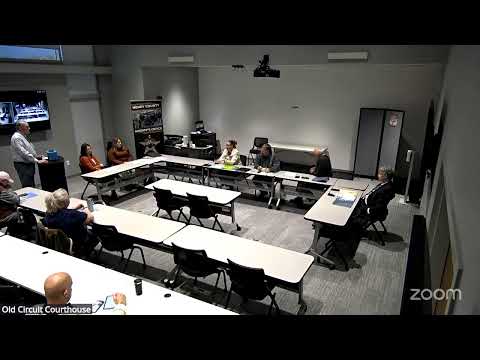
The Henry County health department told commissioners on Oct. 22 that since Sept. 1 it has received roughly eight complaints alleging people are living in tents, RVs or fifth-wheels on private property, and staff said county authorities lack clear enforcement authority for tents and limited authority under state law for temporary structures.
The health department said its primary concern is human waste management and environmental health risks; staff described instances where residents emptied waste tanks at truck stops or used septic-service companies. “We do not have the authority by Indiana code to condemn a tent, an RV, or a fifth wheel,” the health department representative said.
Officials and commissioners described a difference between one camper on a driveway — which development code allows if sewage disposal is managed — and multiple units, which the county’s development code treats as a campground. “One camper, you can have in your driveway no problem… Two constitutes a campground,” a county official who served on the planning commission said, explaining why nuisance ordinances lack explicit tent language.
Health staff said tents are a new issue in county complaints and that many cases involve individuals who may have mental-health or financial issues. Staff described efforts to follow up on sewage complaints and to identify temporary mitigation — for example, coordination with septic companies or providing porta-johns as a short-term environmental protection measure while longer-term assistance is sought.
Commissioners cautioned about enforcement limits when people are on their own property by permission: if no law is broken, the county’s tools are narrow. Officials said they coordinate across departments: planning and code enforcement handles land-use questions about campgrounds while the health department investigates sanitation and potential public-health violations.
No ordinance change was proposed or voted on at the Oct. 22 meeting; staff said they will continue joint follow-up with planning and the commissioners’ offices and will return with recommendations if legal options are identified.
Complaints and sites vary: staff said some residents empty waste tanks at facilities such as truck stops; others pay commercial septic haulers. The health department noted one individual who appears to be a veteran and reported that repair of a private septic system on one property is underway with staff assistance.
The meeting discussion emphasized the complexity of balancing public health and property rights and the need to identify legal, humane and environmentally protective responses before proposing enforcement changes.