Get Full Government Meeting Transcripts, Videos, & Alerts Forever!
Get email alerts on the Local Government Revenue topic
No spam. Unsubscribe anytime.
Beavercreek council candidates split over income tax, agree on preparing for property-tax changes
Summary
At a Beavercreek Women's League forum, city council candidates urged revenue planning amid possible state changes to property taxes; debate centered on a potential city income tax, infrastructure backlogs and preserving services for seniors.
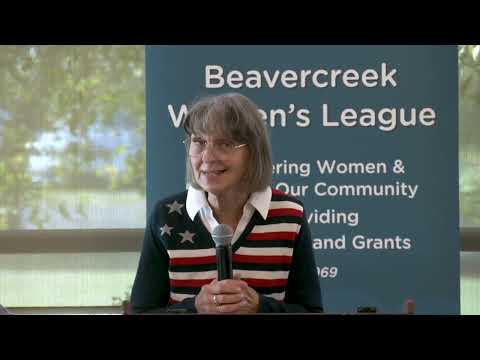
At a candidates forum organized by the Beavercreek Women's League, those running for Beavercreek City Council urged preparation for possible state-driven property-tax changes and offered sharply different views on a proposed city income tax.
Several candidates said the city must diversify revenue streams in case the state reduces or eliminates property taxes. "We need to continue to have open communication about diversification of revenue, whether that means a modest income tax or other alternate forms of funding," said Sarah Bills, a council candidate, during her three-minute presentation.
Incumbent council candidate Glenn Duerer said revenue diversification should be considered now. "I am supportive of the income tax," he said, adding that any tax plan must be paired with property-tax relief. Tiffany Schwartz, a current Beavercreek council member seeking reelection, said she favors a carefully designed income tax that includes an immediate property-tax reduction and earmarks for specific services rather than the general fund. "It needs to be tied very closely to a reduction in property taxes," she said.
Other candidates opposed an income tax. Reginald Malouf, a candidate who described his platform as the "Malouf doctrine," told the audience: "The city income tax is horrible. It doesn't lower our property tax." He argued the city should resist new taxes and prioritize fiscal restraint.
Candidates also pointed to a long list of unfunded city projects, described in the forum as roughly $200 million, and said residents should be told what projects would be covered by any new revenue. "Those are primarily infrastructure projects," Schwartz said, citing stormwater detention and drainage work as examples that currently lack dedicated funding. Several candidates noted the police facility and other city buildings as part of that backlog.
On annexation of township land by the city, candidates frequently emphasized coordination with township officials. "Anything like that would have to be done on a very, very limited case-by-case basis," Duerer said. Multiple speakers said annexation should not be pursued unilaterally and would require consent or a vote by affected property owners.
The forum gave each candidate three minutes and included an audience Q&A after a break. Citywide decisions such as an income tax or major capital project would require formal council action or voter approval; no votes were taken at the forum.
The Beavercreek City Council races are on the Nov. 4 ballot; candidates urged voters to weigh trade-offs between property-tax exposure and potential new revenue sources.