Get Full Government Meeting Transcripts, Videos, & Alerts Forever!
Get email alerts on the School Budget topic
No spam. Unsubscribe anytime.
Scotia‑Glenville board leans toward revote under tax cap to preserve reading teachers and librarian
Summary
At a work session, district administrators presented four budget scenarios and board members indicated support for 'Option A,' a spending cap under the tax levy limit that would preserve two reading teachers and the librarian while cutting other operational expenses.
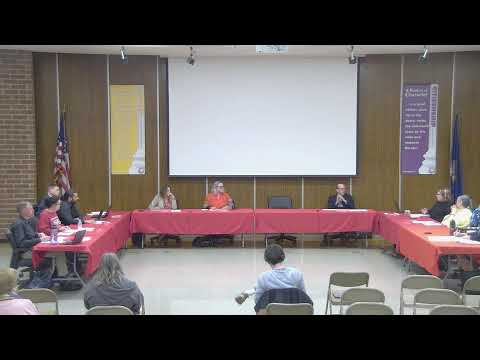
District administrators presented four budget scenarios at a Scotia‑Glenville Central School District work session and board members signaled they prefer a revote on a spending plan that stays under the district—s tax levy cap.
Administrators said two scenarios (labeled Option A and Option B) would reduce spending enough to bring the district slightly under the allowable tax cap; both scenarios preserve the district—s programs, including school resource officers (SROs), learning supports such as Learning Leaps, and summer school. Option A preserves the two reading intervention teachers and the full‑time librarian; Option B achieves the same levy target by not backfilling those three positions. A third scenario would put the district back on the ballot with the unchanged budget that voters rejected, and a fourth would adopt a contingent budget if the board does not pursue a revote.
Why it matters: administrators said choosing a contingent budget would require far deeper cuts. As presented, a contingent budget would require roughly $1.7 million in reductions or equivalent new revenue, which administrators said would likely lead to program cuts and reduced extracurricular access.
Administrators described the mathematics of the options: the revote scenarios that reach the levy cap produce an estimated household tax impact of roughly $64 to $80 annually; one presented revote option earlier in the meeting showed an estimated tax increase of about 1.63 percent and a spending increase of about 2.19 percent and would sit under the district—s levy limit by about $849. Administrators said the packages presented reduce roughly $614,000–$615,000 in spending to hit the levy target under Option A/B.
Assistant administrators detailed where savings were found for Option A: operational realignments (courier/maintenance duties reallocated to free about $55,000), reduced monitor staffing based on historical turnover (about $30,000), leaner substitute and overtime budgeting, targeted reductions in B&G (buildings and grounds) and transportation contracting, modest reductions in professional services and textbooks/hardware/software purchases, and a $50,000 adjustment in special education tied to current enrollment projections (described as roughly one student or a fractional enrollment change). Administrators emphasized these are one‑year, "bridge" reductions and said they will work to deliver custodial, grounds and basic operations despite tighter margins.
Board discussion and direction
Board members repeatedly said they did not want to adopt a contingent budget or reissue the identical budget that voters had rejected. Board member Pam said the district must "give the community a chance to accept a budget that's under the cap," characterizing a straight reissue of the prior budget as unlikely to succeed. Multiple board members said they were "leaning toward" Option A because it retains reading intervention and library services while achieving the levy target. A number of members suggested small additional adjustments before a public revote, including trimming Board of Education travel/convention funds to protect line items such as coaches.
Administrators said they will prepare the formal spending‑cap language for both Option A and Option B so the board can consider separate resolutions at the board—s next scheduled meeting. The administration also noted the timeline for a revote is tight and that the district must complete the same preparation tasks that preceded the previous public vote.
What was not decided
Board members asked questions but did not take a formal vote on a revote option at the work session. The administration repeatedly cautioned that cuts shown are intentionally lean and leave little or no cushion for unforeseen costs. Administrators said certain categories are legally noncontingent (for example, debt service) and that the board must explicitly designate which remaining items would be considered contingent expenses if it moved to that approach.
Next steps
Administrators will return to the board with line‑item versions of Option A and Option B and separate resolutions for each so the board can adopt a spending cap and, if it chooses, place a revised budget before voters at the required next election date.