Get Full Government Meeting Transcripts, Videos, & Alerts Forever!
Get email alerts on the Budget Tax Levy topic
No spam. Unsubscribe anytime.
Scotia-Glenville board adopts revised 2025-26 budget; district projects tighter reserves next year
Summary
The Scotia-Glenville Central School District on June 17 adopted a revised 2025-26 budget that reduces expenditures by about $615,000 and lowers the district's proposed spending increase to 2.19%, but officials warned the district's surplus and several revenue uncertainties could widen next year's funding gap.
The SCOTIA-GLENVILLE CENTRAL SCHOOL DISTRICT board adopted a revised 2025-26 budget on June 17 that reduces expenditures by nearly $615,000 and lowers the district's proposed spending increase to 2.19% from an earlier 3.14%, district staff said. The revised plan sets a tax-levy increase of 3.25%, which staff said is the district's maximum allowable tax cap level (about $849 below the statutory maximum), and an estimated tax-rate increase of about 1.63%.
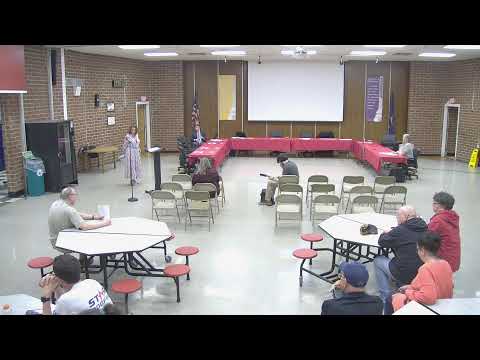
The revision and the fiscal outlook matter because district staff forecast a smaller surplus this year and warned of multiple risks that could increase next year's levy pressure. "We started this with a significant budget gap of about $2,800,000," said Mister Giacuento, the district presenter during the June 9 public hearing. He told the hearing that the district is projecting roughly a $1.8 million shortfall in available surplus compared with the prior year and that the budget uses nearly $4.4 million in fund balance to balance 2025-26.
Officials told the public the revised budget restores two reading teacher positions that had been cut in the first version and reduces line items in transportation, building and grounds, billing and administration to find the $615,000 in savings. "The board then adopted, for June 17, a revised budget which reduced expenditures by almost $615,000," Giacuento said.
Why it matters: district staff described several contingent or one-time items that helped the revised budget but will likely expire or flip to costs in 2026-27. Those include a one-time $15,000 discount on the school resource officer (SRO) contract and the final year of a village grant that covers 50% of SRO costs. Collective-bargaining and vendor escalation clauses, unfilled leaves of absence that temporarily reduced salary costs (about $400,000 expected to return next year), and health-insurance and special-education cost pressures were all cited as drivers of future budget risk.
Staff presentation details: Giacuento said the original revote budget reflected a 5.09% proposed tax-levy increase and an estimated 3.44% tax-rate increase; the revised adoption reduced those figures. He pointed to special education as a major expenditure driver, noting the district had nine more special-education students than budgeted and that the special-education line moved from a $756,000 saving last year to an almost $800,000 adverse variance this year. He also highlighted reduced interest-income upside this year versus the prior year and said revenue is projected to be modestly favorable (about 0.62%).
Revenue uncertainty: staff said the district received $630,000 more in state aid this year, including $325,000 more in foundation aid, but cautioned that the state's treatment of the foundation-aid "whole harmless" provision is uncertain. "If we lose that $325,000, if they pull the whole harmless, then that'd be another almost percent on the tax levy next year," Giacuento said. He also described a potential $500,000 payment-in-lieu-of-taxes (PILOT) tied to a hydroelectric project on Lake Ontario that has been deferred previously; if it arrives it would count toward 2025-26 revenue, but the district said no guarantee exists.
Contingent budget rules and reserves: staff reviewed the district's unassigned fund balance and the constraints on a contingent budget under Education Law. Giacuento said certain expenditures are noncontingent under law (for example specified interfund transfers and health-and-safety items) and that the board has discretionary authority over roughly $900,000 in budget areas where cuts could be made if a contingent budget were required. He emphasized the district must adopt a budget by July 1 to maintain spending authority.
Public questions and board context: several residents pressed district staff on long-term cost trends, salary and benefit growth, and program-level increases. One resident asked why a curriculum-development line had grown since 2009; staff deferred detailed historical line-item analysis but explained collective bargaining, benefits, and other factors contribute to total compensation. Another speaker asked how the restored reading teachers would be used; staff said they would support RTI groups, smaller reading groups, Wilson interventions and guided-reading work.
Outlook: district staff characterized the revised 2025-26 budget as more in line with the district's historical levy and rate medians after the reductions, but they warned that expiration of one-time savings and uncertainty about state aid and the PILOT payment could widen the funding gap going into 2026-27. "We're going to be down this year," Giacuento said of the surplus; he added that the district's projected fund balance will be markedly smaller than the prior year.
Ending: Board members opened the hearing to public questions after the presentation. Staff said they would answer additional questions during the remainder of the public hearing and in subsequent fiscal updates to the board.