Get Full Government Meeting Transcripts, Videos, & Alerts Forever!
Get email alerts on the Education Literacy Graduation topic
No spam. Unsubscribe anytime.
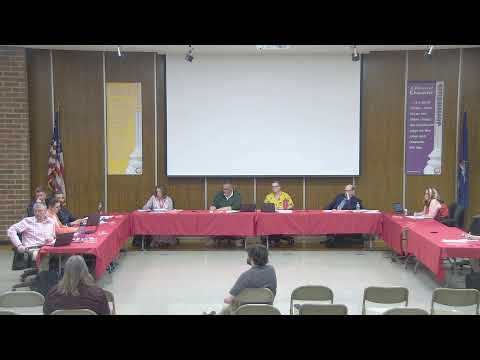
Parents press Scotia-Glenville board to adopt 'science of reading,' demand plan after graduation-rate drop
Summary
At the June 9 Scotia-Glenville Board of Education meeting, parents urged adoption of science-of-reading instruction, questioned curriculum choices and staffing cuts, and called for a formal plan after a reported drop in the district graduation rate.
Christina Scribe, a Scotia parent, told the Scotia-Glenville Central School District Board of Education on June 9 that the district must act on falling graduation outcomes and update early-grade reading instruction.
"We need a formal public plan to address the alarming decline in our graduation rate," Scribe said during the meeting's first public comment period. She described a decline "from 99 percent, when Susan was appointed, to 83 percent 20 years later," and urged the board not to approve bonuses or pay increases beyond contractual obligations until a concrete improvement plan is in place.
Scribe criticized the district's current primary-grade reading program, saying the district still uses the WONDERS curriculum and has not provided dedicated professional development on the "science of reading." "Let me be clear, the science of reading is not a fad," she said, describing it as "a proven research based approach" that integrates phonics, phonemic awareness, vocabulary, fluency and comprehension.
She said other districts locally have moved toward curricula aligned with the science of reading, naming CKLA as an example, and cited national research and organizations to make the case for early intervention. "According to the Annie E. Casey Foundation, students who aren't reading at grade level by third grade are 4 times more likely not to graduate on time," she said.
Scribe also expressed concern about staffing changes. "While I'm saddened to see the librarian position eliminated, I understand that going dark half days a week is far better alternative than losing critical staff who directly support literacy in our district," she said, thanking the board for creating an "option C" that preserved reading teachers.
Resident Jerry Moore addressed the board in both the first and second public hearings and raised separate but related budget concerns. In the first hearing he argued that the district's library-services spending had declined over time, saying "over 15 years, your library budget is down 46% relative to inflation." He later returned in the second hearing to press for greater budget transparency and to say he believed the budget included room for substantial raises: "You come find out that in this budget, there's approximately 7.8% available in the salaries line for raises for the teachers," Moore said.
Moore urged the board to present line-item salary information at budget hearings so voters can see personnel costs, saying "if you're gonna have an informed vote" the public needs to see how much the district pays for staff who provide programs.
Why it matters: Public commenters tied long-term academic outcomes to current curriculum and staffing decisions. Requests included a district plan to reverse the reported decline in graduation rates, adoption or piloting of science-of-reading-aligned materials, expanded professional development for early-grade teachers, and clearer budget transparency related to salary lines and library funding.
Board context and next steps: The district's budget and related personnel and program motions were on the June 9 agenda; board members and district finance staff discussed a third fiscal projection the same evening. The district's next public budget vote was announced during the meeting (board members reminded the public to "vote next Tuesday").