Get Full Government Meeting Transcripts, Videos, & Alerts Forever!
Get email alerts on the Student Phone Policy topic
No spam. Unsubscribe anytime.
Scotia‑Glenville presents draft 'bell‑to‑bell' cell phone policy; public hearing set for July 14
Summary
District staff presented a draft policy to bar phone use during the school day to align with New York’s new bell‑to‑bell law, outlined exemptions and enforcement plans, and scheduled a public hearing for July 14 with a required board adoption by Aug. 1.
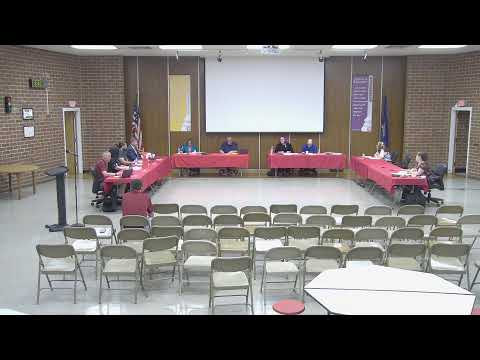
Scotia‑Glenville Central School District officials presented a draft “bell‑to‑bell” cell phone policy and scheduled a public hearing on the proposal for July 14, district staff said. The board must approve a final policy by Aug. 1 to comply with state law.
Mr. Arquette, a district staff member who presented the draft, said the policy grew from a yearlong task force of administrators and teachers and that the task force’s recommendation was “to ban cell phones, for the duration of the school day, from the start of the day until the end of the day.” He said the recommendation aligns with a recent initiative by New York Gov. Kathy Hochul that prohibits sanctioned use of smartphones and other internet‑enabled personal devices “for the entire school day from bell to bell.”
The draft would keep elementary students’ phones off their person and stored in cubbies; middle‑ and high‑school students would be required to store phones in lockers for the day. Arquette said the district sees lockers as easier to check for violations: “If they have the cell phone on their person during the school day and they don't have an exemption, they are violating the rule.”
The presentation listed several exemptions that track the state law, including devices needed for medical reasons (for example, diabetes monitoring apps), accommodations documented in Individualized Education Programs or 504 plans, use by students who serve as primary caregivers, English language learners using translation tools, and limited academic uses where a phone provides functionality not available on Chromebooks. Arquette also described a discretionary emergency exemption that building administrators could grant on a case‑by‑case basis and suggested visible exemption cards to help staff identify students who are permitted to have a phone.
The draft also outlines enforcement and discipline limits under the state law: administrators can confiscate phones and require parent pickup, and can assign in‑school consequences for noncompliance, but “you can’t externally suspend a student out of school for just having their cell phone on the person,” Arquette said. He warned that insubordination (for example, refusing to hand over a phone) could still escalate into more serious discipline under the code of conduct.
District staff discussed possible technology solutions and pilots. The presentation noted some districts use locking pouches (branded “Yondr” or similar) that secure phones during the school day; the district plans to pilot a small number first if locker storage proves insufficient. Arquette gave an estimated pouch price range mentioned in vendor quotes and district outreach as roughly $10 to $73 per pouch, and said statewide funding to support implementation was small relative to need — the presenter cited $13 million allocated statewide but said distribution across hundreds of districts would limit local impact.
Arquette said the policy will be posted to the district website by the end of the week to solicit feedback before the July 14 public hearing. He described a plan to train staff for consistent enforcement and to survey students and staff during the first year to determine whether the policy reduces distraction and whether adjustments are necessary.
During public comment, Jesse Knapp of Mohawk Avenue urged the board to clarify how students can quickly contact parents under the new rules. “I’m hoping that there will also be a policy in place on how the students can get ahold of the parents maybe through a similar fashion,” Knapp said, giving examples of schedule changes and team communication that currently rely on student access to phones.
The board did not vote on the draft at the meeting; it scheduled the public hearing and set the statutory adoption deadline of Aug. 1 as the next major milestones.