Get Full Government Meeting Transcripts, Videos, & Alerts Forever!
Get email alerts on the Expungement Records Access topic
No spam. Unsubscribe anytime.
Committee pauses overhaul of expungement and juvenile-record access after lengthy testimony from law enforcement, advocates and families
Summary
Lawmakers held a package of expungement and criminal-history access measures after extended hearings where state police, chiefs, prosecutors, public defenders and child advocates warned of technical, privacy and system-capacity issues.
The Senate Corrections and Criminal Law Committee paused action on a package of bills that would change when and how adult and juvenile criminal records can be expunged and who — including law enforcement — may see expunged or juvenile records.
Sponsor Senator Michael Baldwin said the proposal responds to concerns about people with serious violent convictions obtaining expungements and to requests from law enforcement for more timely access to criminal histories. But testimony revealed broad disagreement about scope, privacy and technical feasibility.
Barbara Rosenberg of the Indiana State Police said her agency’s expungement unit processes tens of thousands of petitions annually and sometimes cannot complete work because courts do not always provide complete case summaries. State police paralegals asked for routine access to certain court records so they can verify petitions.
At the same time, chiefs and frontline officers from cities including Fishers and Indianapolis told the committee they do not always have reliable, instant access to a person’s complete criminal history — including records that have been expunged — when they are on the street. “My officers on the side of the road at 2 a.m. cannot get this information on expungements,” Fishers Chief Ed Gephardt said. IMPD representatives said juvenile records are sometimes only available after formal process or a search warrant.
Public defenders, juvenile-justice advocates and nonprofit lawyers urged caution about expanding law enforcement access to juvenile adjudications or converting juvenile adjudications into “ceiling”-style records that remain accessible. Rachel Belinski, who represents juvenile clients, told the committee most juvenile records are still not expunged automatically and warned that juvenile delinquency records can include highly sensitive information that courts have traditionally kept confidential to protect rehabilitation.
Joel Winnecke of the Public Defender Council and others said court technology, county record systems and workload constraints create implementation costs that are not reflected in the fiscal documents. He asked the committee to consider the programming and staffing impacts of making juvenile records accessible by web portal or by changing deletion requirements.
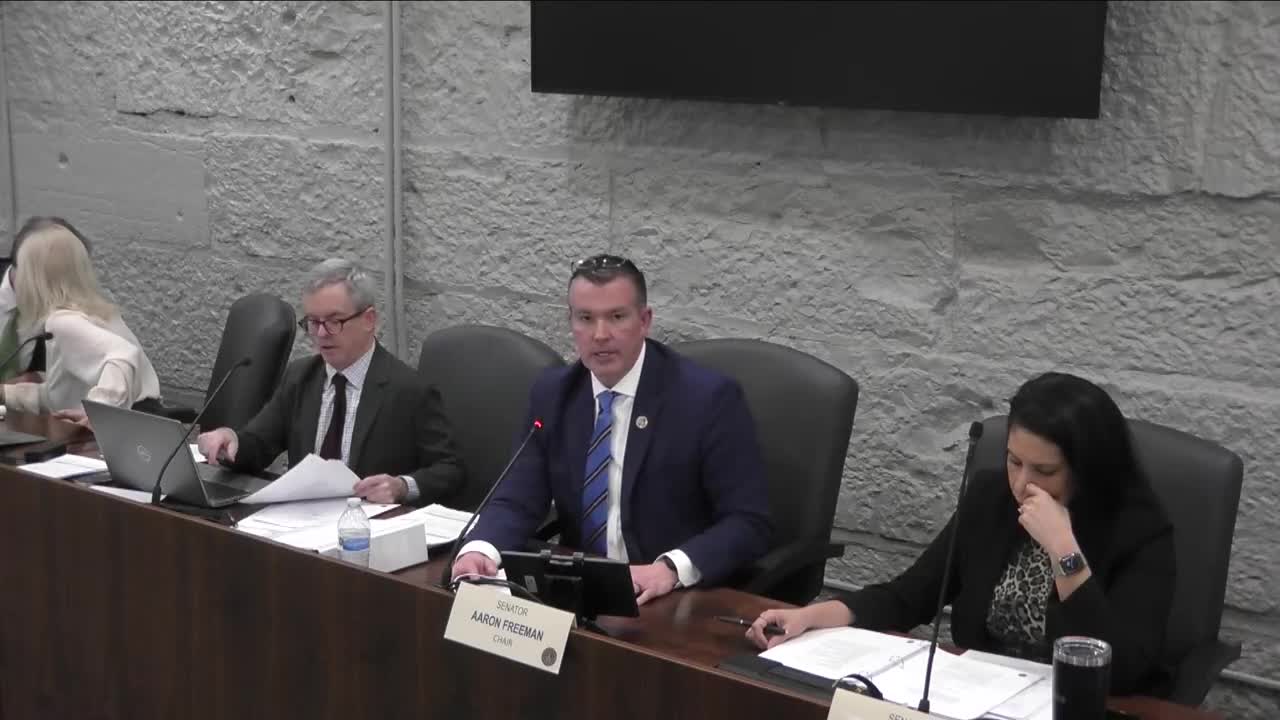
Chairman Gerry Freeman said he would hold the bill so the sponsor and stakeholders could prepare amendments. Multiple senators thanked witnesses and asked for more precise language on: which juvenile records would be available, what access law enforcement would have, whether serious violent felons should ever be eligible for expungement, and how to protect victim privacy and children’s medical information.
The bill was held for further work; committee members said they would hear an amended version at a future date.