Get Full Government Meeting Transcripts, Videos, & Alerts Forever!
Get email alerts on the Criminal Procedure topic
No spam. Unsubscribe anytime.
Committee approves misdemeanor for refusing DNA collection on felony arrest
Summary
The Senate Corrections & Criminal Law Committee voted to make it a misdemeanor to refuse a court-ordered DNA sample during booking after a felony arrest, expanding enforcement tools cited by state police and sheriffs.
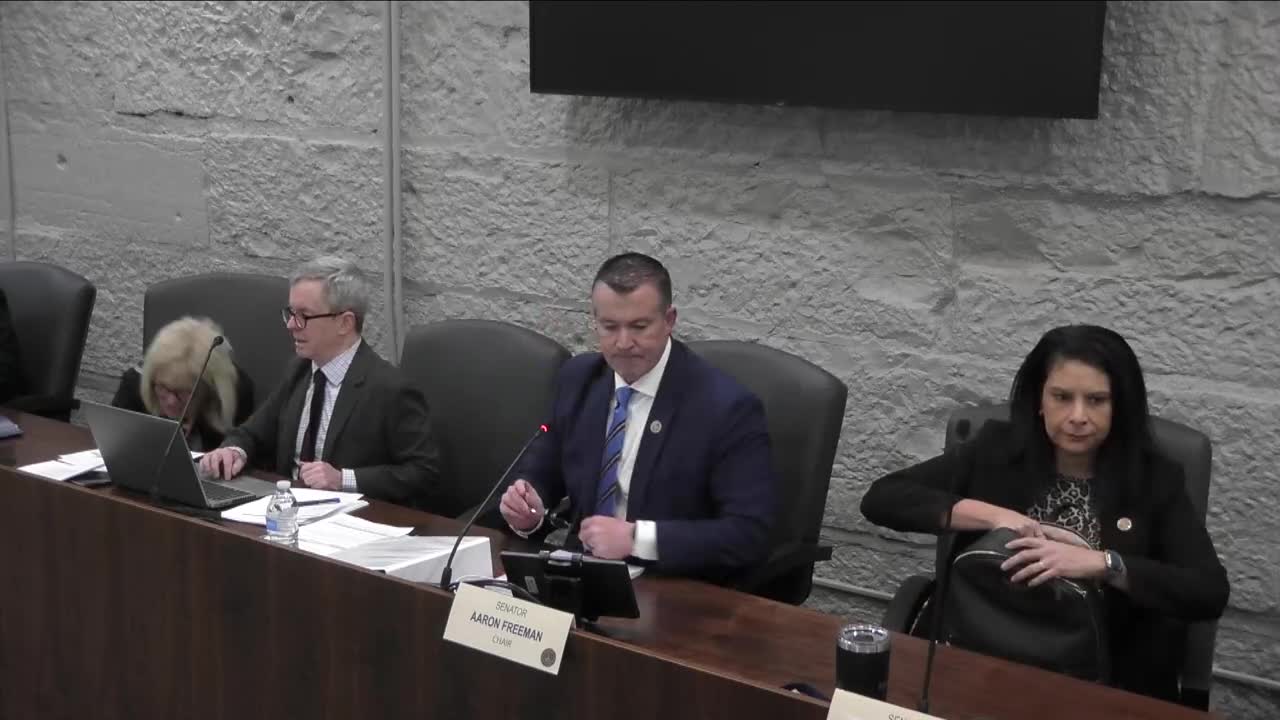
The Indiana Senate Corrections and Criminal Law Committee on Thursday approved a bill that would make it a misdemeanor for a person to refuse to submit a DNA sample during the booking process after a felony arrest.
The measure, carried in the committee by Senator Mark Bridal, was described as a technical but necessary fix requested by the Indiana State Police and multiple sheriff’s departments to address refusals that have complicated booking procedures since a 2017 law required DNA collection on felony arrests.
“Lots of different sheriff’s departments reached out to our lab asking for this legislation to be added,” Barbara Rosenberg, legislative director and legal counsel for the Indiana State Police, told the committee. Rosenberg said the change would help ensure samples are entered into CODIS and noted there is an existing process to remove a person’s DNA from CODIS if charges are dismissed.
Opponents at the hearing asked that the law apply only after conviction rather than at arrest. Ashley Grogg, legislative representative for Hoosiers for Medical Liberty, said she was “appalled” that the bill applies at arrest and urged shifting collection to after conviction to protect genetic privacy. “I do believe people have the right to due process,” Grogg said.
Sheriffs who testified said refusals during booking can force jails into difficult positions, holding people past custody limits while attempting to complete booking. “This would be an easy fix to a problem that is statewide,” Sheriff Dan Mayworth of Adams County said on behalf of the Indiana Sheriffs’ Association.
The committee voted to pass the bill out of committee without amendment. The committee’s recorded tally was 7–0 in favor.
The bill now moves to the next stage of the legislature; committee members said privacy concerns raised at the hearing should be considered by the full legislature.