Get Full Government Meeting Transcripts, Videos, & Alerts Forever!
Get email alerts on the Environment topic
No spam. Unsubscribe anytime.
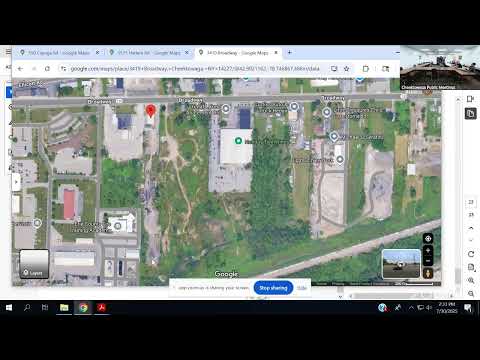
Use‑variance request at 3419 Broadway raises environmental questions; committee to review reports
Summary
A use‑variance request to allow vehicle servicing on three parcels at 3419 Broadway prompted committee discussion about past on‑site petroleum storage and environmental testing; staff will review phase‑1/phase‑2 reports and monitoring well data before the item returns for further action.
On July 5 the Barnwell Advisory Committee discussed a use‑variance application for 3419 Broadway that would allow servicing of public vehicles on three parcels currently in a manufacturing zoning district. The Committee did not reach a final recommendation; staff and the applicant agreed to submit and review environmental reports before further action.
Town staff told the Committee that the Zoning Board has previously considered the matter and that a determination under the town’s environmental review process is needed before a final ruling can be made. The applicant provided a Phase I environmental site assessment prepared by Stoll Engineering and a limited Phase II investigation completed by an individual identified in the materials as Divisentes. Staff said the Phase II work identified evidence of past on‑site petroleum storage, including topsoil piles and removed barrels, and that monitoring wells had been installed and were recommended for decommissioning after analytical testing showed no continuing issues.
Richard Seager of Castle Construction and Aaron Tiller, an engineer, participated for the applicant. Seager said the cleared parcels are presently “just stone, grass, and dirt” after demolition of prior houses and that he observed no stored vehicles or debris on a recent site visit. He said the operation proposed by the applicant would store materials inside and use trailers to transport waste or removed material off site rather than leaving it on the property.
Committee members expressed concern about whether prior containers and topsoil piles had been properly handled and whether contamination had leached into the ground; staff noted the Phase II report’s conclusion that no chemical concentrations of concern were detected in monitoring wells and recommended decommissioning the wells if confirmed. Staff asked the applicant to provide the full report set for review; the applicant agreed to provide the materials digitally and in hard copy for staff review.
The Committee did not vote on the variance application at the July meeting. Staff said if the town issues a negative declaration in conjunction with the use‑variance request, the applicant would return with new site plan information for the Committee’s consideration. For now, staff will review the Phase I/II materials and follow up on any disposal or remediation requirements identified in the reports.