Get Full Government Meeting Transcripts, Videos, & Alerts Forever!
Get email alerts on the Open Meetings And Legal Proceedings topic
No spam. Unsubscribe anytime.
Richmond council enters closed session to consult on probable litigation and discuss state lobbying contracts
Summary
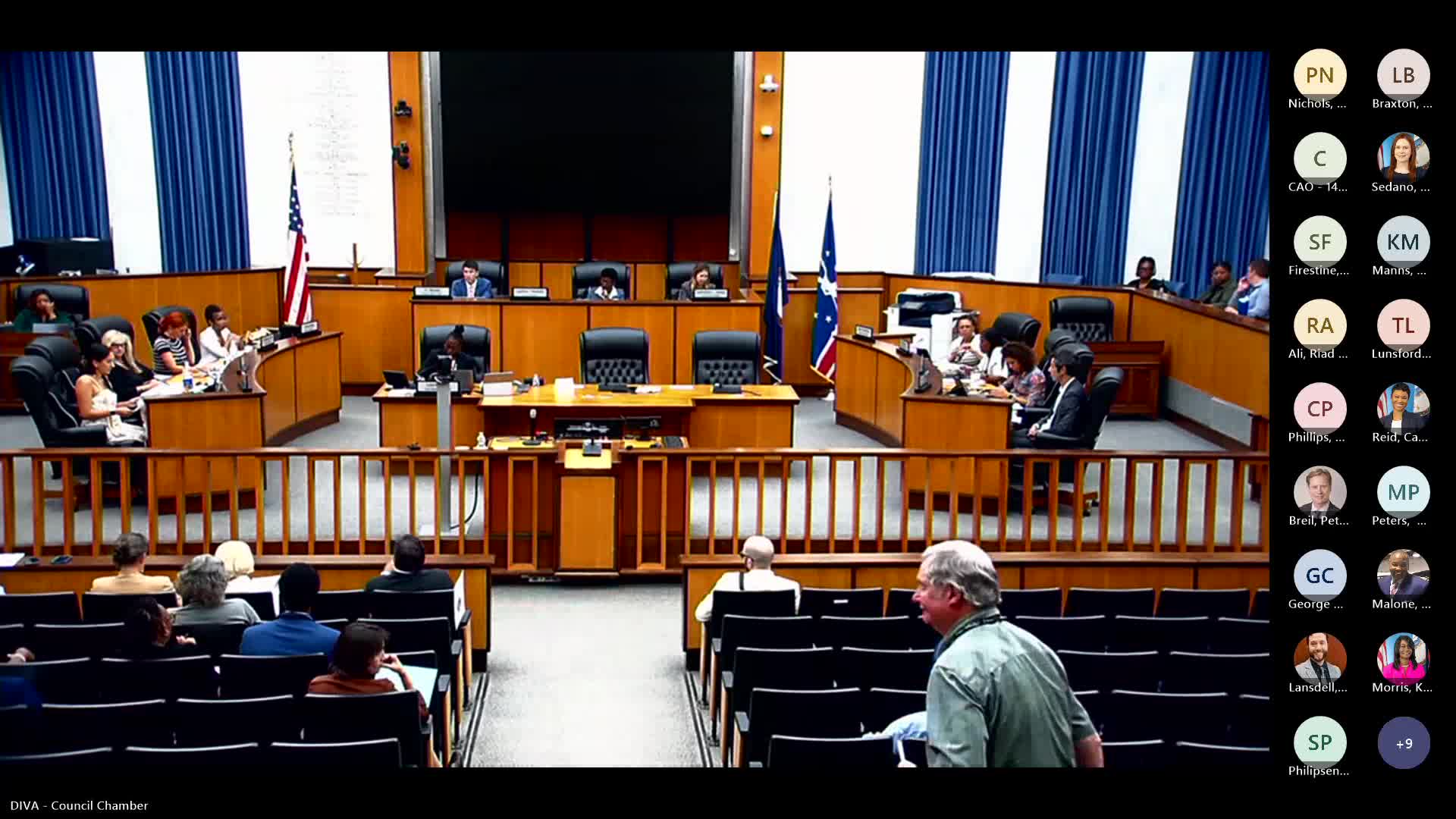
The council voted unanimously to go into a closed meeting under the Virginia Freedom of Information Act to consult with city attorneys on probable litigation and to discuss terms for state lobbying and legislative‑services contracts; the council later reconvened and certified the closed session.
The Richmond City Council voted unanimously to hold a closed meeting to consult with legal counsel about probable litigation and to discuss the award and terms of state lobbying and legislative services contracts.
The action matters because the subjects listed for the closed session—probable litigation and the terms of lobbying contracts—are matters that can affect city legal exposure and the use of public funds for outside services.
At the informal meeting the council moved to enter a closed meeting "pursuant to subdivision a7 and a29 of section 2.2‑3711 of the Virginia Freedom of Information Act to 1, consult with legal counsel concerning probable litigation because consultation in an open meeting would adversely affect the negotiating or litigating posture of the city, and, 2, discuss the award of a contract or contracts involving the expenditure of public funds relating to state lobbying and legislative services, and the terms and scope of each of such contract or contracts, because discussion in an open meeting would adversely affect the bargaining position or negotiating strategy of the city." A council member then seconded the motion. The council voted by roll call; each recorded member voted "aye." "That motion has been approved," the clerk said, and the council proceeded to closed session.
After the closed session, the council reconvened, took a motion to end the closed meeting, and certified by roll call that, to the best of each member's knowledge, only public business matters lawfully exempted from open meeting requirements were discussed and that only the matters identified in the motion to convene the closed meeting were considered.
Ending: The council did not disclose substantive details from the closed session at the end of the meeting beyond the statutory reasons for convening the closed meeting and the certification on reconvening.