Get Full Government Meeting Transcripts, Videos, & Alerts Forever!
Get email alerts on the Police Media Agreements topic
No spam. Unsubscribe anytime.
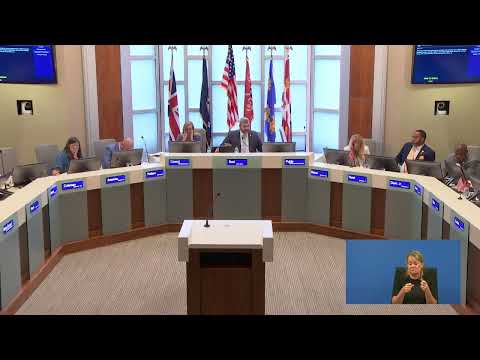
Metropolitan Council approves agreement for On Patrol Live to film with Baton Rouge Police Department after heated debate
Summary
The Metropolitan Council approved a contract allowing Half Moon Pictures LLC to film the series On Patrol Live with the Baton Rouge Police Department after extended council questions about oversight, footage ownership and community impact.
The East Baton Rouge Parish Metropolitan Council voted to authorize the mayor-president to enter into an access agreement with Half Moon Pictures LLC for the documentary series currently titled On Patrol Live, a proposal the police chief described as a recruiting and public‑relations tool and which drew sustained questioning from multiple council members.
Council debate focused on who owns and controls footage, whether recordings would be public records, whether the filming would change policing practices, and the potential economic and reputational effects on the city. Police leaders said the production company would own the raw production footage and that the department would have pre‑air oversight.
Chief (Baton Rouge Police Department) told the council the project had been under study for more than a year and said the series is “not a reality TV show … it is more of a documentary” that emphasizes day‑to‑day community interactions rather than high‑adrenaline enforcement. The chief said the department would have “all the oversight on what officers are doing or on the show,” that commanders would preview footage live and could direct producers not to air segments, and that the production company’s practice is to delete raw footage after 30 days.
Mayor‑President Sid Edwards spoke in support, saying the show offered an opportunity to “shine positivity on our parish” and to highlight “the beautiful things our local police department does.” The mayor added that the production could help recruitment and tourism by showing community events and positive officer interactions.
Opponents urged caution. Councilman Dunn Jr. said he opposed the agreement and argued the program could amplify negative images of crime and harm residents whose interactions with police are recorded but never lead to convictions. He said broadcasted interactions could damage an individual’s future employment or schooling prospects even if they are not charged.
Other council members raised technical and legal questions. Councilman Kenny asked how the show differs from earlier reality programs and whether filming would be geographically diverse; the chief replied he would direct crews to patrol different areas and that he would try to avoid overrepresenting any single neighborhood. The parish attorney advised that the production company’s footage being owned by the company was “a matter of policy” rather than a legal impossibility.
Council members also discussed money and logistics. The chief said the production covers overtime costs incurred by the department’s personnel working with producers, and that no city budget money would be required; a council member later clarified a prior public comment on “$100,000” was a misunderstanding.
After the discussion, a motion to approve the agreement passed on a recorded vote; council members registered objections during debate but the motion carried. The council directed that department oversight remain active and that leaders retain the right to stop filming or withdraw cooperation if the broadcast fails to meet the department’s stated goals.
The council’s approval allows the chief and department staff to proceed with the access agreement; the production will film during the week and the program airs later, with department review before broadcast, officials said.
Questions the council raised — who controls final aired content, whether any footage will be obtainable by public‑records request, and what restrictions the city can impose going forward — were addressed in general terms by the chief and the parish attorney but remain governed by the actual contract language that the council approved.
A final procedural note: councilmembers asked to be kept informed of how producers use footage and urged the chief to exercise the promised front‑end control if content presents community harm or officer‑safety issues.