Citizen Portal
Sign In

El Paso auditors outline method for selecting 2025–26 audit projects, cite staffing and hours limits

5692198 · August 28, 2025

Loading...

AI-Generated Content: All content on this page was generated by AI to highlight key points from the meeting. For complete details and context, we recommend watching the full video. so we can fix them.

Summary

Internal audit staff detailed the process used to rank risks and convert available staff hours into audit “slots” for the City of El Paso’s 2025–26 annual audit plan, and fielded questions from Financial Oversight and Audit Committee members about administrative time, contingency hours and hotel tax audit capacity.

The Financial Oversight and Audit Committee heard a presentation on the process the internal audit office uses to prepare the City of El Paso’s 2025–26 annual audit plan, including how staff rank risks, calculate available audit hours and schedule audits.

The audit office described a multi-step process: gather stakeholder input, create a “long list” of candidate audits, score each item across nine risk areas (up to five points each), apply discretionary weight points and then convert the top-ranked items into audit engagements based on available auditor hours.

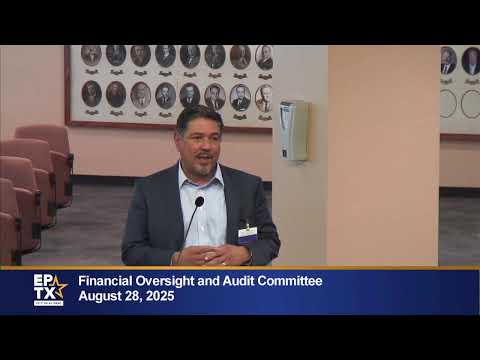
Miguel, an internal audit presenter, told committee members the office begins with a stakeholder interview phase that included FOAC members, the city manager, deputy city managers, the city attorney, the airport director, the deputy CFO and the city risk manager. “We create a list internally we call a long list,” he said, and then “we rank them by nine risk areas” to produce a shorter list for the committee to prioritize.

The office showed its hour math: 2,080 theoretical annual hours per auditor, reduced by vacation, leave, training and administrative time to an estimated 1,560 available audit hours per auditor in the example presented; multiplied by staff totals, the office estimated roughly 12,480 total available audit hours for the year. Individual full audits were estimated at about 500 hours each, with follow-up audits capped at about 250 hours; the office also reserves quarterly contingency hours (often 300–400 annually for the whole staff).

Committee members pressed for detail on how those non–audit hours were allocated. Representative Maldonado Rocha asked for a breakdown of “office admin time” versus sick leave, holidays and training. Miguel said some administrative duties—ordering supplies, tracking leave and sending emails—are shared among auditors and payroll staff and that the audit plan package to the committee will show the specific hour allocations.

Members also discussed the audit office’s hotel occupancy audits. Representative Nino noted the city has about 100 hotels and that the program currently audits roughly 20 hotels per year. Miguel said an earlier attempt to audit 30 hotels “short-circuited” logistics between the city’s consultant and staff and that 20 per year has been the practical throughput.

Committee members asked for another iteration of the audit plan to be provided before the committee votes on the plan and requested the office show the numeric scores and any bonus weight points used to elevate closely ranked items. The presenter said staff will meet again with committee members and expects to bring a draft audit plan back for review at a future meeting.

The presentation included operational details the committee said it wants published for transparency: the audit office plans to post the risk-assessment slides and the final audit-plan materials on its webpage.

The discussion did not include a formal committee vote or adoption of the audit plan; committee members requested follow-up meetings and the draft plan for formal review and approval.