Get Full Government Meeting Transcripts, Videos, & Alerts Forever!
Get email alerts on the India Pakistan Conflict topic
No spam. Unsubscribe anytime.
Pakistan says India carried out illegal strikes, warns of lowered nuclear threshold and urges comprehensive dialogue
Summary
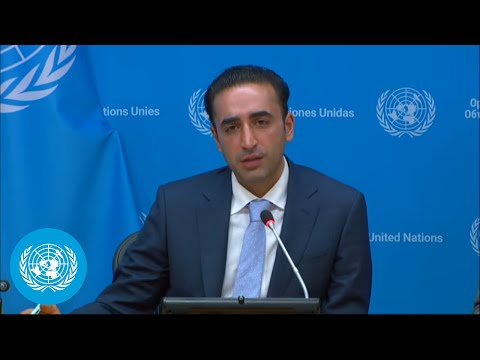
Bilawal Bhutto Zardari, former foreign minister of Pakistan and leader of a multiparty parliamentary delegation to the United States, told reporters at the United Nations that India launched “illegal strikes within Pakistan in violation of the UN charter, in violation of international law,” and that those strikes targeted civilian infrastructure, places of worship, dams, and energy facilities.
Bilawal Bhutto Zardari, former foreign minister of Pakistan and leader of a multiparty parliamentary delegation to the United States, told reporters at the United Nations that India launched “illegal strikes within Pakistan in violation of the UN charter, in violation of international law,” and that those strikes targeted civilian infrastructure, places of worship, dams, and energy facilities.
Why it matters: Bilawal said the recent exchanges — including strikes and missile launches between the two countries — lowered the threshold for full-scale military conflict between two nuclear-armed states and created a more dangerous regional environment. He urged diplomacy and a mutually agreed mechanism to address terrorism, water disputes and Kashmir.
Bilawal said the strikes followed a terror attack in Indian-administered Kashmir that India used as the pretext for its operations. Pakistan, he said, offered to join an impartial international investigation into that attack and “we did so because we were confident, our hands are clean.” According to his account at the briefing, India refused Pakistan’s offer and instead carried out the strikes on May 7.
“Pakistan only ever acted in self defense,” Bilawal said, adding that Pakistan’s military “responded with precision. They only targeted and downed 6 planes because we believed those 6 planes were the ones who released their load on Pakistan.” He also said Pakistani forces had locked on to 20 Indian aircraft that night but engaged only the six that released ordnance.
Bilawal credited international mediation for the ceasefire, saying intervention by the international community and the U.S. helped achieve a pause in hostilities. He warned, however, that the ceasefire did not make the region safer. “The threshold for full blown military conflict between two nuclear armed states has come down,” he said, adding that future incidents might not leave enough time for outside intervention.
The delegation also raised long-standing complaints about Indian activities in Pakistan, including allegations that India supports militant proxies in Balochistan. Bilawal said Pakistan had presented dossiers to international bodies and cited the custody of an individual identified in the briefing as “Kalboshin Yadav,” whom he said had admitted to supporting groups in Balochistan.
Bilawal put Kashmir’s unresolved status before the U.N. Security Council at the center of regional instability and said that promises made to the people of Kashmir remain unfulfilled. He called for a comprehensive dialogue that would include terrorism, Kashmir and water issues and for establishing “a mutually agreed forum where we work together to identify the terrorists, to track the terrorists, and deliver justice to the victims of terrorism.”
On water, Bilawal accused India of “weaponizing” the Indus Water Treaty and warned that threats to cut water would amount to an act of war for Pakistan. He said acting on such a threat “would be seen as an act of war by Pakistan” and cited the potential effect on “200,000,000 people.”
Bilawal also responded to a question about the reported use of Israeli equipment, saying, “As far as I’m aware, absolutely. Israeli drones were used, during, India’s attack on Pakistan,” and asked reporters to allow his team to expand on technical details if necessary.
He repeatedly urged dialogue over military responses and said Pakistan was willing to engage in intelligence-sharing and other cooperation if India reciprocated. “There is need for deep introspection within India society, between the Indian government,” he said, and called on both countries to use diplomacy rather than armed action.
The Pakistani delegation said it will continue multilateral engagement at the U.N. and begin bilateral meetings in Washington, D.C., to press Pakistan’s case and encourage international support for a negotiated resolution.
Ending: Bilawal closed by reiterating Pakistan’s offer to submit to an investigation despite having “no legal obligation under international law” and urged adherence to the U.N. Charter and international law by all parties.