Get Full Government Meeting Transcripts, Videos, & Alerts Forever!
Get email alerts on the Water Loss Infrastructure topic
No spam. Unsubscribe anytime.
SAWS to scale crews, leak detection and capital spending to cut water loss
Summary
SAWS told council members May 20 it has increased crews, doubled proactive leak detection and boosted pipe‑replacement budgets to reduce system water loss, and it urged closer coordination with Public Works to minimize repeated street disruptions.
San Antonio Water System officials on May 20 told the Municipal Utilities Committee that reducing water loss in the distribution system is a central priority and outlined operational and capital steps to do so.
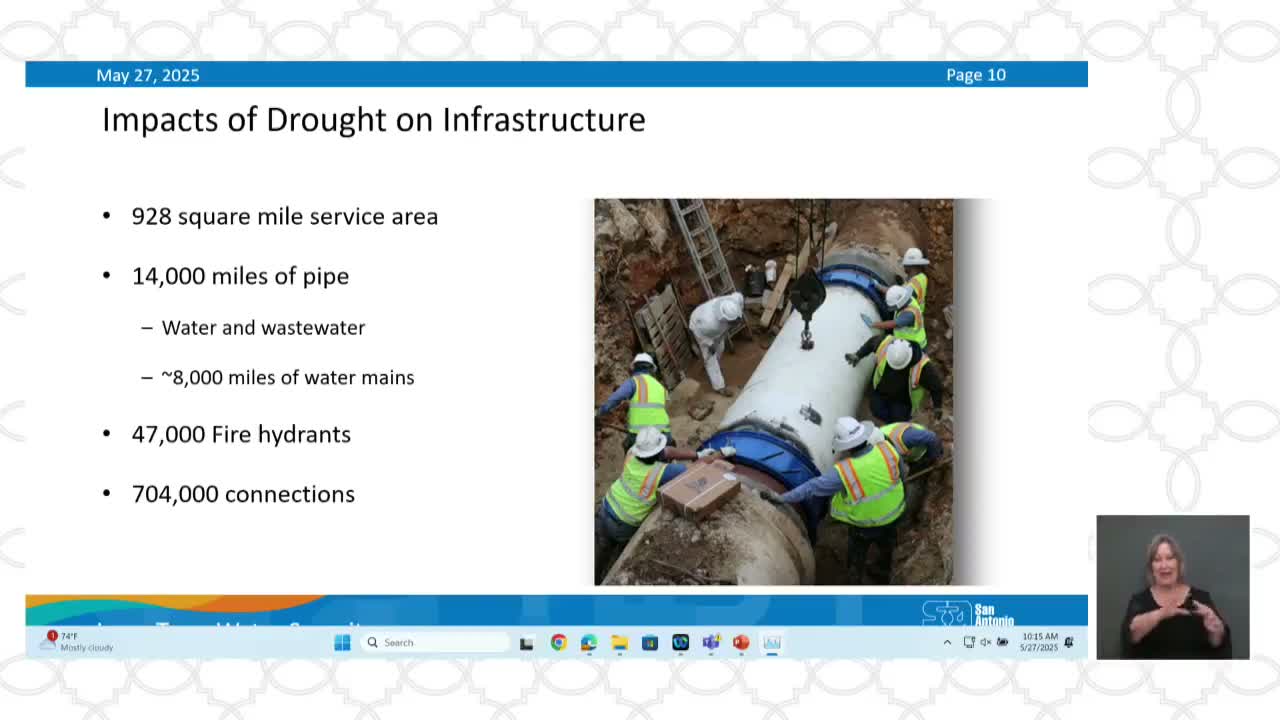
"Main breaks are not limited to the summer months," SAWS said in its presentation; the utility reported a record number of leaks in March and April and said aging pipes, contracting soils and growth are key drivers. SAWS staff said the system comprises about 14,000 miles of pipe and that main‑replacement spending has increased sharply from $34 million in 2024 to $108 million in the current year, with a five‑year average budgeted at roughly $76 million through 2030.
On operational responses, SAWS said it had added more than 100 crews to respond more quickly to leaks and has reduced the backlog of outstanding repairs by about 40%. The utility also described expanding proactive leak detection work: "We more than doubled our leak detection program," a SAWS operations speaker said, adding that the agency purchased new technology and tools and hired additional staff to seek buried leaks across the system.
Committee members pressed for comparative benchmarks and oversight. Councilman White said, "This is far too much water to be losing on a daily basis," and asked how SAWS compares with other cities. A SAWS staff member replied comparisons are difficult because systems differ by rainfall, soils and fragmentation; the staff member said SAWS is "generally industry standard" on water loss but acknowledged San Antonio’s fragmented pressure zones and large elevation differences increase complexity.
Council members also raised coordination with Public Works to limit repeated pavement disruptions when SAWS must dig for repairs. SAWS said it is reviewing capital and street‑maintenance schedules with the city to align repairs and repaving where practical and that the utility has a named program director overseeing the leak‑reduction effort.
SAWS did not propose new regulatory action at the meeting but said it would continue to prioritize leak detection, main replacement and interdepartmental coordination. Staff framed the effort as long‑term and resource‑intensive: identifying underground leaks remains difficult, the utility said, and full remediation will require sustained funding and continued operational expansion.