Get Full Government Meeting Transcripts, Videos, & Alerts Forever!
Get email alerts on the Ggrf Cal Fire High Speed Rail topic
No spam. Unsubscribe anytime.
May revision seeks $1.5 billion GGRF shift to CAL FIRE, at least $1 billion annually for high‑speed rail; LAO urges caution
Summary
The administration’s May budget revision asks lawmakers to shift roughly $1.5 billion from the general fund into the Greenhouse Gas Reduction Fund for Cal Fire operations and proposes at least $1 billion annually for high‑speed rail; the Legislative Analyst’s Office urged caution, noting auction volatility and federal funding risks.
The administration’s May revision to the budget dropped a pair of high‑profile priorities on the table: a shift of about $1.5 billion from the general fund into the Greenhouse Gas Reduction Fund (GGRF) to support Cal Fire operations and a proposal to deliver at least $1 billion annually in GGRF for high‑speed rail.
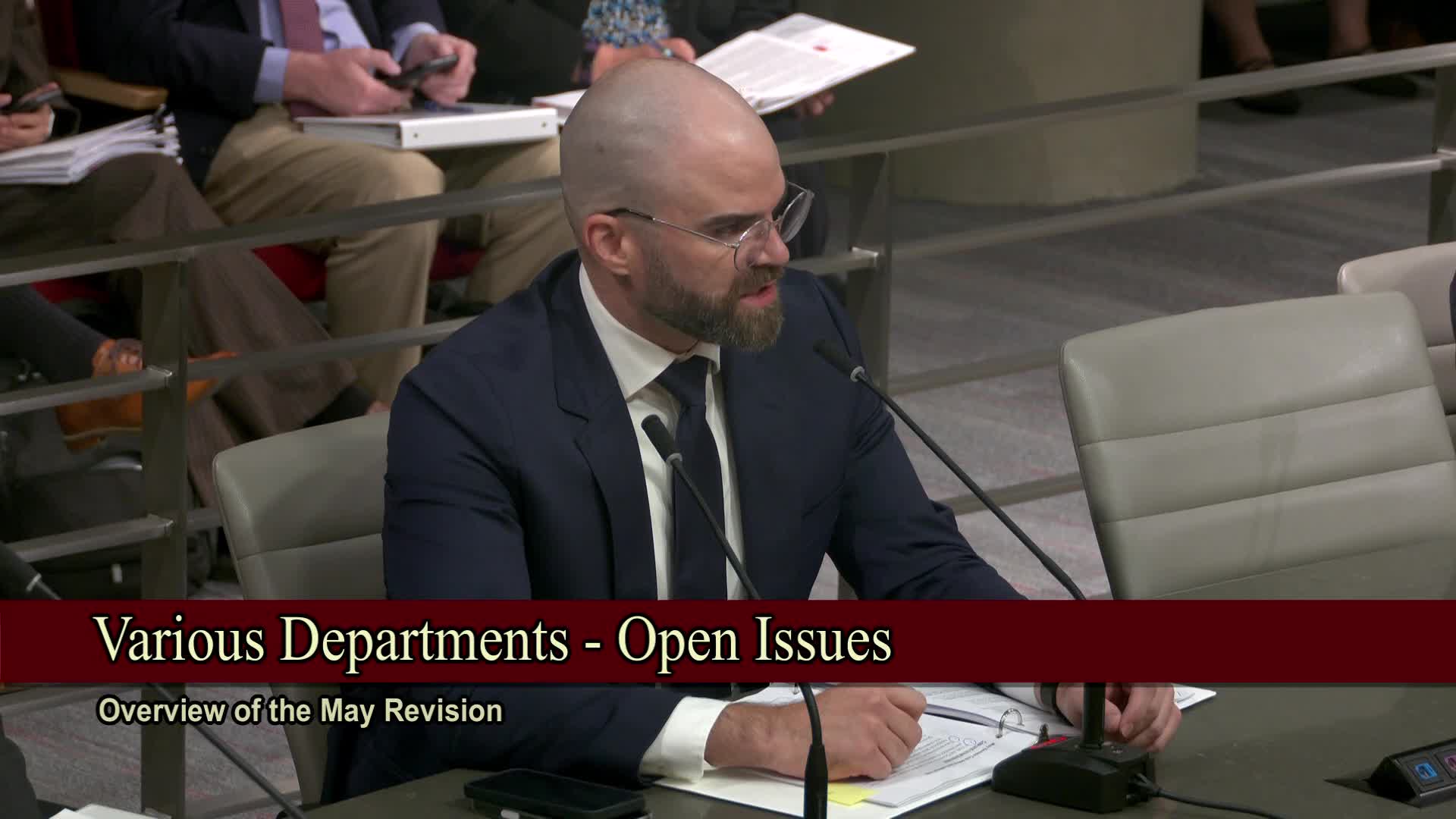
Rachel Ehlers of the Legislative Analyst’s Office told the subcommittee the LAO finds the governor’s revenue assumptions "reasonable" and endorses multi‑year approaches. But she also cautioned lawmakers the GGRF is auction‑driven and volatile. "You do not need to make these decisions in the next couple of weeks," Ehlers said, urging the Legislature to take time on major policy choices and emphasizing the need to preserve prudent reserves.
How the proposals work: The administration said the Cal Fire proposal would grow to roughly $1.9 billion by 2029–30 and include a general‑fund backstop so operations are protected if GGRF auction receipts fall short. The high‑speed rail ask in the May revision would set a $1 billion minimum annual floor (replacing the prior 25 percent allocation formula) to provide a stable funding signal for the authority and allow the authority to explore financing options.
High‑speed rail finance and uncertainty: Mark Tolleson, chief of staff at the High Speed Rail Authority, said additional funding targeted to Merced‑to‑Bakersfield could allow the authority to complete that segment and create options to advance beyond the valley. He told senators the authority estimates the Merced‑to‑Bakersfield segment’s cost at roughly $34.9–$38.5 billion and that further detail will be provided in a supplemental project update later this summer.
LAO and fiscal caveats: LAO analysts emphasized two limits: (1) ongoing GGRF proceeds vary with allowance prices and auction results; (2) some planned federal funds that the Authority expects could be at risk. Helen Kerstein of the LAO noted that the authority’s federal funding—roughly $3.1 billion from a federal/state partnership—could be vulnerable to federal review. "If you don't like this package of solutions, you'll have to find significant solutions elsewhere," Ehlers told the committee.
Implications for discretionary GGRF programs: Administration staff said the May revision does not include a full, final GGRF expenditure plan; rather, it identifies administration priorities and leaves the remaining balance for discussion with the Legislature. That means ongoing formula and discretionary programs funded by GGRF — including vehicle electrification and some transit investments — may be subject to legislative negotiation.
Ending: With auctions occurring and the Legislature preparing its budget response, committee members said they would examine how continuous appropriations, securitization proposals and federal fund risks interact with state priorities. The administration and LAO agreed the Legislature should take time to weigh long‑term spending tradeoffs.