Get Full Government Meeting Transcripts, Videos, & Alerts Forever!
Get email alerts on the Calrecycle Sb54 topic
No spam. Unsubscribe anytime.
CalRecycle’s SB 54 draft rules draw scrutiny over exemptions, OTCs and hazardous‑waste criteria
Summary
CalRecycle released a new informal draft of regulations to implement SB 54 (the packaging‑reduction and producer responsibility law). At a Senate hearing agency officials said the draft is informal and will be refined; lawmakers and stakeholders pressed CalRecycle to limit categorical exemptions, clarify treatment of over‑the‑counter
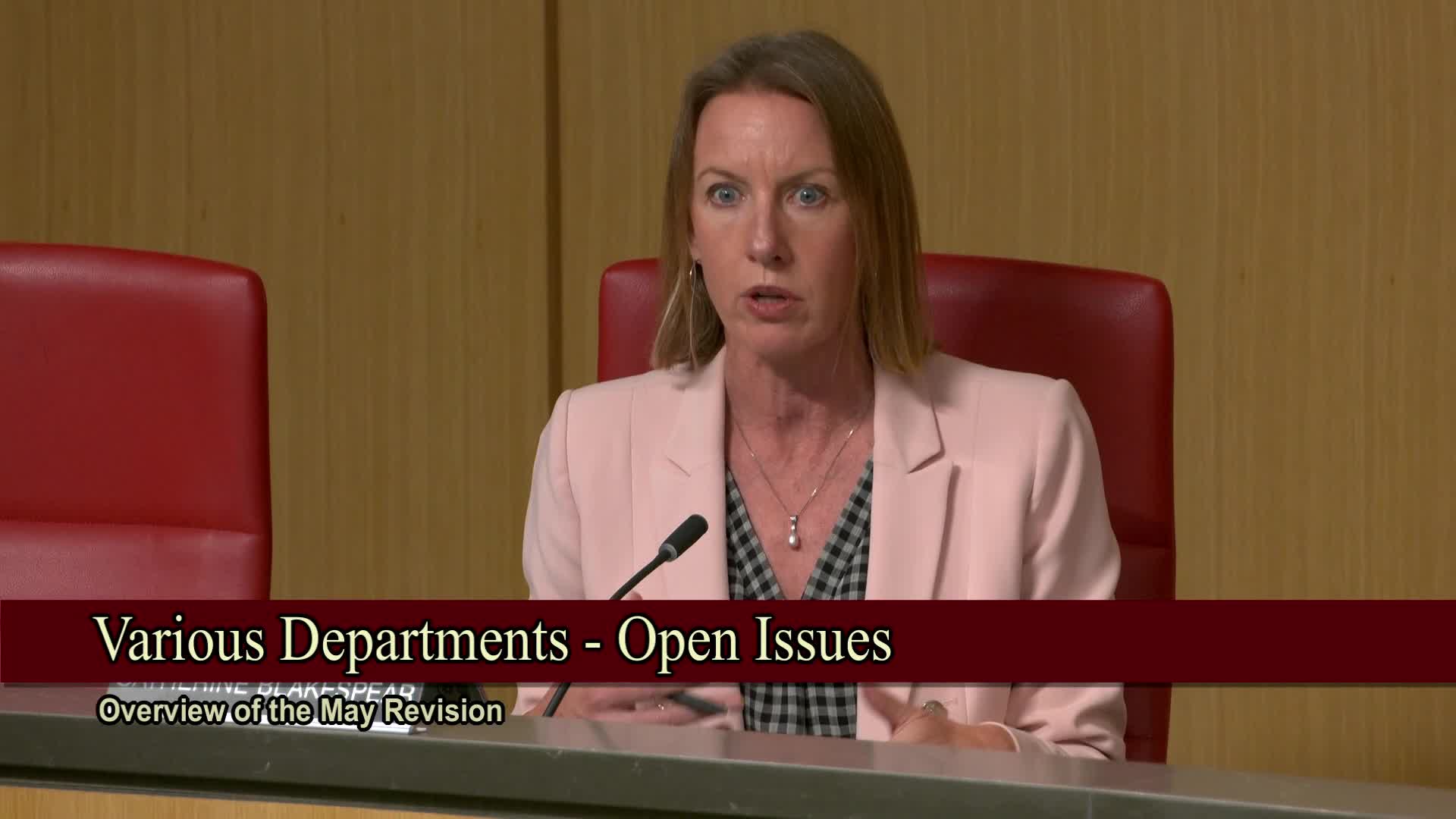
CalRecycle officials returned to a Senate Budget Subcommittee hearing to discuss a new informal draft of regulations implementing SB 54, the 2022 packaging‑producer responsibility law. Mindy McIntyre, chief deputy at CalRecycle, said the agency released the draft to gather comments and would hold a public workshop on May 27.
Lawmakers and committee staff raised three main concerns about the draft rules: an apparently broad categorical exemption tied to compliance with federal law, the agency’s proposed approach to over‑the‑counter (OTC) products, and how the regulations would treat recycling technologies that generate hazardous waste.
On exemptions, CalRecycle said its intent was to avoid conflict with federal laws and food‑safety standards that can require particular packaging attributes. Critics urged the agency to use a formal, discretionary waiver or “unique challenge” process rather than a broad categorical route that could allow wide classes of packaging to evade producer responsibilities without clear criteria or a review process.
Regarding OTC drugs and medical devices, the committee noted SB 54’s text excludes medical devices but not all OTC products; the draft appeared to exclude some OTC categories (AR/curbs the authority to make broad exemptions without statutory change. CalRecycle said it would work with stakeholders in the informal comment period and that the Office of Administrative Law review in the formal rulemaking would also examine statutory consistency.
On recycling‑technology criteria, CalRecycle proposed standards to determine which processes count as “recycling” for the program’s diversion calculations and whether a process creates “significant amounts” of hazardous waste. Committee members said the statute requires excluding technologies that generate significant hazardous waste; some senators said the draft relied on an ISO technical standard and other benchmarks that are behind paywalls or otherwise hard for the public to review; they urged clearer, public, and statutory‑grounded criteria.
Why it matters: SB 54 is among California’s major waste‑reduction laws and determines how producers pay and how jurisdictions and processors measure recycling. Draft regulation language that expands exemptions or leaves key definitions vague could significantly alter the law’s scope and industry obligations.
Next steps: CalRecycle said the May 27 workshop and the formal notice‑and‑comment process will be opportunities for stakeholders and lawmakers to propose changes; the agency agreed to provide clarifying materials and to meet with legislative staff to address statutory consistency and the public‑access concerns about referenced standards.