Get Full Government Meeting Transcripts, Videos, & Alerts Forever!
Get email alerts on the Public Health Budget topic
No spam. Unsubscribe anytime.
Columbus Public Health proposes $44.7 million 2025 budget; officials warn of grant dependence and staffing pressures
Summary
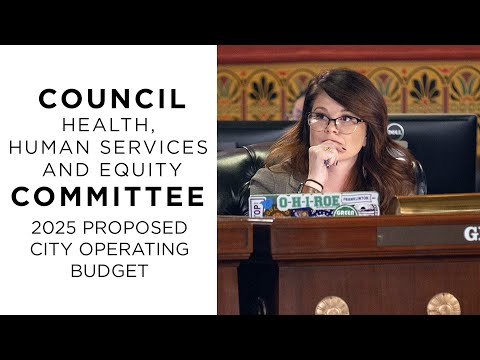
Health Commissioner Dr. Mashika Roberts presented a $44,718,674 operating budget to the Council’s Health, Human Services & Equity committee, outlining staffing, program priorities and reliance on grants and other non‑general‑fund revenue.
Columbus Public Health presented a proposed 2025 operating budget of $44,718,674 to the City Council Health, Human Services & Equity committee, with the agency highlighting program priorities, grant dependencies and workforce concerns.
Commissioner Mashika Roberts said the proposed budget includes “just under $35,000,000 for personnel costs,” and described a funding mix that uses city general fund support (45%), grants (44%) and public health services fees (11%). She said the department is in the third year of a $9 million CDC grant that helps retain and recruit public‑health staff.
Roberts described major program lines: roughly $7.5 million for environmental health (inspections, vector control, food and water safety); approximately $4.9 million for clinical health services (immunizations, women’s health and sexually transmitted infection services); $5.2 million for neighborhood social services and anti‑violence programs; and a $350,000 contract for SafePoint harm‑reduction services.
Workforce and funding pressures: Roberts said the department is “optimizing grant funding” and has held some positions open or placed staff on temporary grant funding to balance the budget after a modest decrease in the city general‑fund subsidy. At one point she cited 325 full‑time equivalents on general‑fund payroll and 20 part‑time positions but later clarified the agency employs roughly 550 full‑time staff across all funding sources; she said grant funding supports over 220 positions and the CDC grant funds positions focused on public‑health workforce development.
Public‑health priorities for 2025 include continued work on disease outbreak response, data modernization, addiction services (using opioid settlement dollars for mental‑health and addiction positions), expansion of culturally competent counseling via minority vendors, continued distribution of gun‑safety lock boxes, and funding for mobile crisis and right‑response social‑work teams that work alongside first‑responders.
Questions from council members focused on contingency planning if state or federal cuts occur, use and unpredictability of opioid settlement dollars, and expansion of alternate crisis‑response pilots. Roberts said the city has no confirmed cuts at the state level but is planning contingencies and that opioid settlement payments are irregular in amount and timing; the department is using current settlement funds to hire vacant FTEs for addiction‑plan coordination and to temporarily fund programs like a home‑visiting maternal mental‑health program.
No formal action was taken at the hearing.