Get Full Government Meeting Transcripts, Videos, & Alerts Forever!
Get email alerts on the Budget And Human Services topic
No spam. Unsubscribe anytime.
Columbus council hearing spotlights strained human‑services budgets and rising demand across public health, housing and food systems
Summary
Council members and nonprofit leaders told the Health, Human Services & Equity committee that rising need — combined with fading federal pandemic aid and uncertain state and federal policy — will put heavy pressure on the city’s social‑service safety net in 2025.
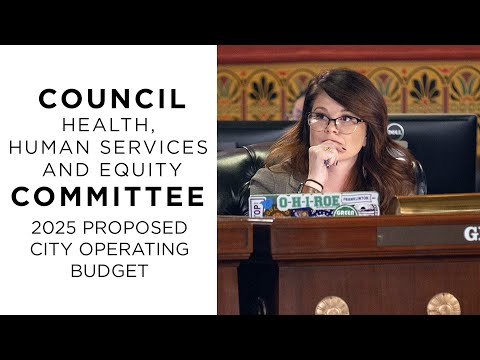
Columbus City Council’s Health, Human Services & Equity committee on Monday heard budget presentations and testimony from city departments and local nonprofit partners stressing that demand for services is rising while many funding streams have shrunk or are uncertain.
Committee Chair Council Member Melissa Green opened the hearing by framing the session as a review of Mayor Andrew Ginther’s proposed 2025 budgets for departments and programs overseen by the committee and a chance to hear from external human‑service partners. “We are at an absolutely pivotal moment,” Green said, noting proposed state cuts to education funding and possible Medicaid work requirements that she said could result in tens of thousands of Ohioans losing coverage.
Why it matters: nonprofit leaders, department directors and council members repeatedly warned that the loss of American Rescue Plan Act (ARPA) and other temporary funds, combined with growing housing and food costs, workforce shortages and policy uncertainty at the state and federal level, will raise service demand while constraining providers’ ability to respond. Many witnesses urged local funding and creative partnerships to fill gaps.
City and agency details: deputy director Hannah Jones summarized the Department of Development’s human‑services general fund proposal of $10.8 million, including roughly $10 million for programming and $811,000 for staff. Columbus Public Health Commissioner Dr. Mashika Roberts presented a proposed Public Health operating budget of $44,718,674, saying the agency blends general fund support, grants and fee revenue and is “in year 3 of a $9 million CDC grant” to support workforce recruitment and retention.
Nonprofit testimony: representatives from the Community Shelter Board, Mid‑Ohio Food Collective, CelebrateOne (infant and maternal health), COAAA (aging services), the Human Service Chamber and dozens of local providers described sustained increases in homelessness, food insecurity and behavioral‑health crises. Steve Skavencie of the Community Shelter Board asked the city to consider a comprehensive funding package to sustain outreach, shelter, rapid re‑housing and winter warming centers; Mid‑Ohio Food Collective said monthly service visits have roughly doubled since 2021.
What the committee plans: no formal votes were taken at the hearing; members asked presenters follow‑up questions and signaled they will weigh requests as the city budget process advances. Council members repeatedly asked departments and partners to identify leverageable matching funds and program designs that can scale or be paired with county, philanthropic and hospital investments.
Ending note: multiple speakers said the city’s ability to deliver core services — and the local economy that depends on a healthy workforce — will hinge on preserving and redirecting limited resources. “Investing in our human infrastructure is also good for our own bottom line as a city,” Chair Green said.