Get Full Government Meeting Transcripts, Videos, & Alerts Forever!
Get email alerts on the Code Enforcement Safety topic
No spam. Unsubscribe anytime.
Oakdale adopts code-enforcement safety standards to comply with Senate Bill 296
Summary
Council adopted a code enforcement officer safety policy that includes personal protective equipment, pepper-spray certification and radio access after a staff-led threat assessment required by state law (SB 296). Council noted modest equipment costs and a $3,000 radio acquisition concern.
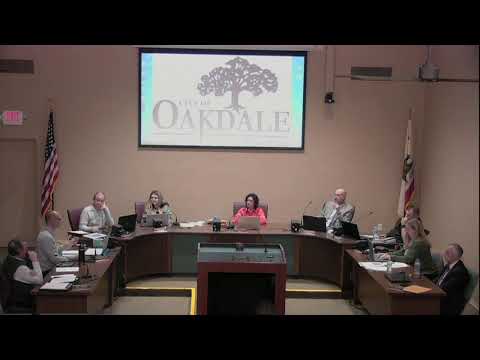
The Oakdale City Council on Feb. 18 adopted a code enforcement officer safety standards policy designed to comply with California Senate Bill 296, which requires jurisdictions that employ code enforcement officers to assess threats and adopt safety standards.
City staff presented a tailored safety policy that includes a threat-risk evaluation, issuance of pepper spray with required certification training, increased radio communications (the police department agreed to provide radio access), and a portable protective equipment kit containing respirators/masks, coveralls and shoe covers for fieldwork. Staff emphasized that code enforcement officers are not sworn peace officers but face hazards ranging from mold and hazardous building interiors to confrontational property owners.
Code enforcement officer Diana Guerrero Garcia described field experience supporting the policy, saying she has assisted with at least 10 hoarding homes and has encountered hazardous conditions including human and animal waste and one meth-lab cleanup where multiple agencies coordinated a remediation. She told the council: “The Tyvex suit is definitely something needed. The booties, when you walk in...you don't want to bring these things home.”
Council members asked about fiscal impacts; staff said most costs (personal protective gear, pepper-spray certification at roughly $40 per course and spray for about $30 each) are modest and expected to be absorbed in existing operating budgets. Council member Kettering raised the cost of an additional police radio (staff later estimated roughly $3,000 as a realistic procurement cost). The council approved the policy 5-0 and asked staff to track actual equipment costs and report as needed.