Get Full Government Meeting Transcripts, Videos, & Alerts Forever!
Get email alerts on the Portable Sawmills topic
No spam. Unsubscribe anytime.
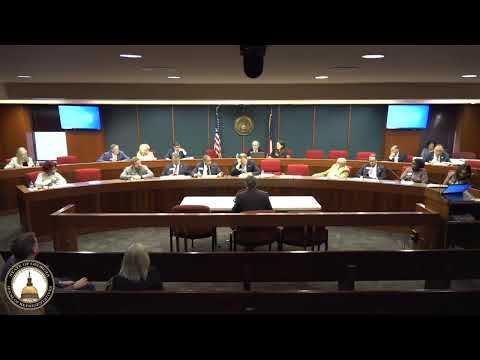
Hearing held on bill to classify portable sawmills as agricultural practice on farmland
Summary
Lawmakers heard testimony on a bill that would define portable sawmill operations as agricultural practices on agriculturally zoned land, protecting small urban and rural farms that mill timber onsite.
The committee held a hearing on a bill that would amend state code to classify portable sawmill operations as an agricultural practice when performed on property zoned for agriculture.
Representative Jenkins, the bill sponsor, said the measure would protect small and urban farms that use trailer-mounted portable sawmills to mill timber onsite. "This bill defines portable sawmill operations as an agricultural practice because the production of timber is an agricultural practice," Jenkins said. He told the committee the mills at issue are small, trailer-mounted units used to convert otherwise-waste timber into usable lumber, typically for on-farm uses or small local customers.
Members asked about noise, waste and scale. Chairman Gunner and other members discussed distinctions between industrial sawmills and portable units; Jenkins said industrial mills operate with mechanized equipment and three-phase power, while portable mills are hand-loaded and operate at much smaller scale. Jenkins emphasized the bill applies only on agriculturally zoned parcels and does not permit sawmill operations in residential subdivisions.
Representative Carter urged caution about removing local regulatory authority in urban areas; Jenkins responded the bill does not change zoning authority and only applies where land is already zoned agricultural. Members asked the author to return with more information; the sponsor indicated he would seek another committee meeting to continue the discussion.
Because this was a hearing only, no committee vote or formal action was recorded in the transcript.
Supporters described the bill as protecting small farm income streams and keeping wood material out of landfills; opponents (or concerned members) pressed for clarity on zoning limits, noise and waste-handling expectations.