Get Full Government Meeting Transcripts, Videos, & Alerts Forever!
Get email alerts on the Wildfire And Open Burning topic
No spam. Unsubscribe anytime.
Columbus County commissioners vote down change to ‘high hazard’ fire-danger designation after farmers raise concerns
Summary
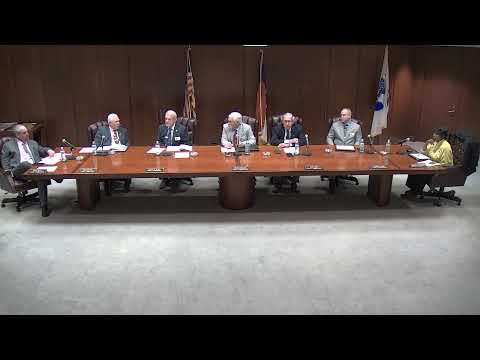
After an hour of debate over permits, farming exemptions and development-related smoke, the Columbus County Board of Commissioners declined a resolution that would have reclassified the county from a moderate to high wildfire-hazard designation.
The Columbus County Board of Commissioners voted 4-3 to reject a resolution that would have changed the county's open-burning classification from "moderate hazard" to "high hazard," after an extended public and commissioner discussion about how the change would affect farmers and land clearing.
The measure, presented by Operational Section Chief Shane Hardy of the North Carolina Forest Service, would have shifted the county from coverage under North Carolina General Statute 106-94.3 (non-high hazard) to 106-94.2 (high hazard). Hardy told the board that the high-hazard classification would require permits for open burning 24 hours a day and would allow forestry staff to require land-clearing permits and to decline permits when smoke impacts or other statutory conditions were not met.
"The only difference in that regard between a non-high-hazard county and a high-hazard county is that a permit is required 24 hours a day," Shane Hardy, operational section chief, said. "They're free. You can get them online. They take about a minute to get." Hardy said land-clearing burns above roughly five acres would require an on-site assessment before a land-clearing permit could be issued.
Commissioners and members of the public asked whether ordinary agricultural burning — such as burning wheat fields between planting and harvest — would be affected. Hardy said farmers must obtain regular burning permits now and can receive permits online for up to 30 days, and that the high-hazard change would not retroactively criminalize accidental wildfires. "If a combine catches on fire, it's a wildfire," he said. "You don't have to, of course, have a permit for an unintentional fire."
Several commissioners voiced concern that the change would impose new administrative burdens on small farmers. "I can't support it myself ... unless the farmers are gonna be exempted," said Commissioner Byrd, who questioned how the rule would affect small, time‑sensitive planting and harvesting windows. Other commissioners suggested asking state legislators to craft an exemption that distinguishes farmers from large-scale developers.
A formal roll call produced three votes in favor and four opposed, leaving the county's hazard designation unchanged. The board did not adopt the resolution.
The discussion included historical context: Hardy said Columbus County originally had a high-hazard classification because of organic soils in parts of the coastal plain and that several neighboring counties have recently moved back to high hazard as development has increased. Commissioners discussed pursuing a legislative change to exempt farmers while retaining stricter controls on large land‑clearing burns by developers.
The board directed no formal follow-up action during the meeting; commissioners discussed, but did not adopt, a plan to contact state legislators about possible statutory language distinguishing agricultural burning from large-scale land clearing.
Speakers listed in the record included Shane Hardy; County Manager Eddie Madden; Chairman Louvert Coleman; Vice Chair Chris Smith; and Commissioners Byrd, Brent Watts, Bullard, Scott Floyd and Featherston. Hardy and multiple commissioners supplied the technical details and clarifications about permit windows, waivers for accidental wildfires and the practical effects of the change on landowners.
Looking ahead, several commissioners urged staff to pursue a legislative solution that would allow stricter oversight of large-scale land clearing while minimizing additional burdens on family farms and small landowners.