Get Full Government Meeting Transcripts, Videos, & Alerts Forever!
Get email alerts on the Public Safety Facilities topic
No spam. Unsubscribe anytime.
Council okays Heffer Welker to take Fire Station 4 design to 50% construction documents; mayor says the design phase will narrow costs
Summary
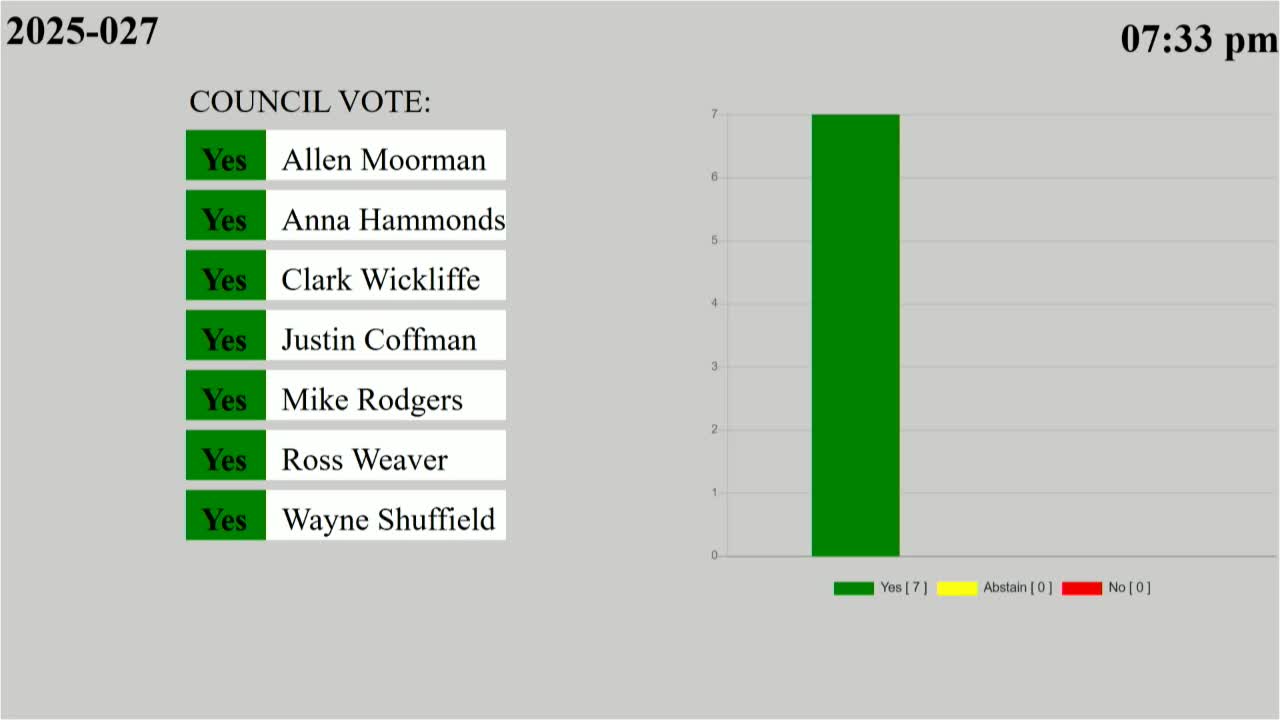
Council authorized the city manager to finalize an agreement with Heffer Welker Architects for design services up to 50% construction documents for the planned Fire Station 4. The initial authorization totals $889,400 for design through 50% completion; the council voted in favor (6-1).
The Midlothian City Council authorized the city manager to finalize a professional services agreement with Heffer Welker Architects to advance design and engineering for Midlothian Fire Station No. 4 to 50 percent construction documents, at a cost of $889,400 for the work described in the packet.
Council members said they wanted a higher level of design refinement before asking voters or identifying a formal funding mechanism, and staff said getting to 50 percent documents will produce a more reliable guaranteed-maximum price (GMP) estimate when the city selects a construction manager at-risk (CMAR).
Why it matters: Staff is proposing a staged approach where the city programs the building and takes it to 50 percent design so the CMAR and architect can deliver a more accurate cost figure. The fee request reflects site assessment, surveying, geotechnical work and design programming needed to format a GMP in the months ahead.
Approval and next steps: Council approved the authorization 6-1. Staff and the architect said they expect to present a refined GMP and funding options once 50 percent documents are completed; further design and document completion would require additional fees to be authorized later if council elects to proceed to full construction documents and bidding.
Budget note: Council members discussed the design fee in the context of the budget and emphasized value-engineering opportunities that could reduce square footage and optional items while preserving long-term flexibility.