Get Full Government Meeting Transcripts, Videos, & Alerts Forever!
Get email alerts on the Pharmacy Benefit Managers topic
No spam. Unsubscribe anytime.
Ohio Pharmacists Association urges transparency, licensure for PBMs in testimony on House Bill 229
Summary
The executive director of the Ohio Pharmacists Association testified in support of House Bill 229, which would create a PBM licensure and reporting framework, require standardized reporting, give the insurance superintendent examination authority, and exclude ERISA plans; committee members asked about fees, audit costs and fiduciary language.
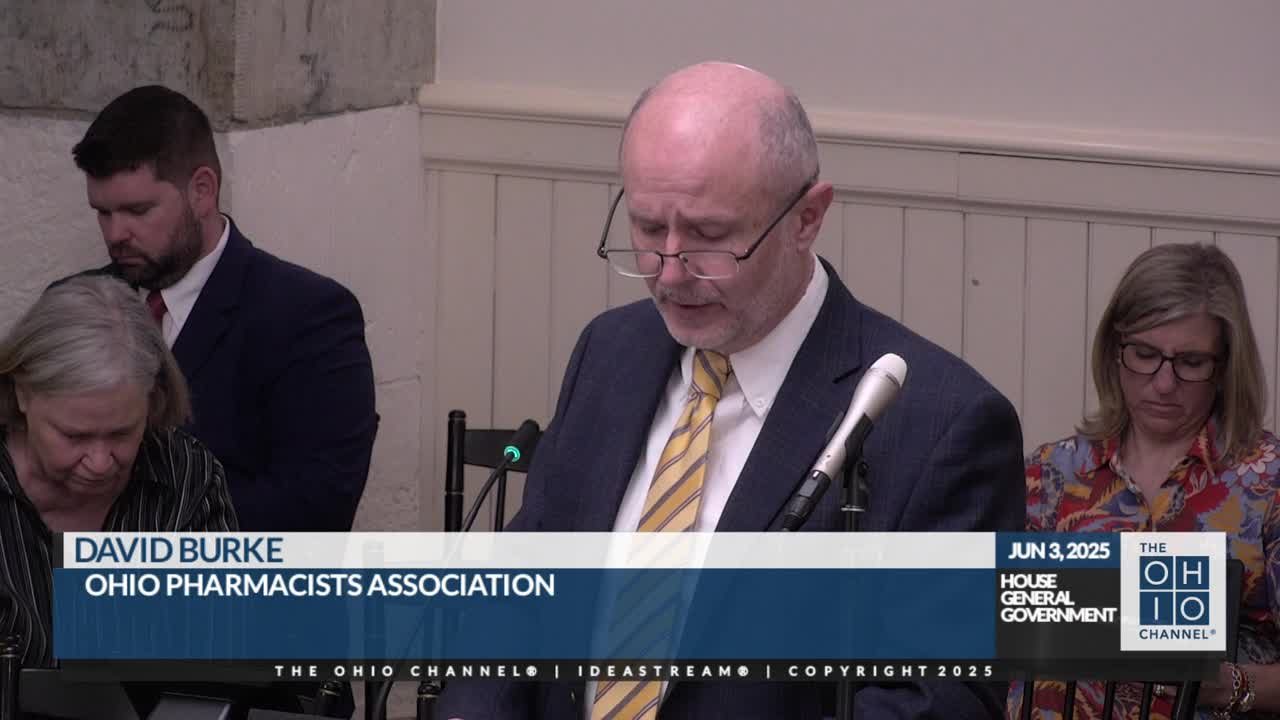
David Burke, executive director of the Ohio Pharmacists Association, testified before the House General Government Committee in support of House Bill 229, saying the legislation would bring transparency and regulatory oversight to pharmacy benefit managers (PBMs) that now control a large share of pharmacy networks.
Burke told the committee that three major PBMs control roughly 80% of pharmacy networks and act as middlemen that determine price and reimbursement with limited public transparency. He said House Bill 229 would move PBMs out of the existing third-party administrator chapter of law into a separate chapter, require licensure, enhance records retention and set standardized reporting criteria. The bill would also define a narrow fiduciary duty, exclude ERISA plans from state regulation, and give the superintendent of insurance the authority to examine PBM books and records while maintaining confidentiality.
Burke highlighted Ohio Medicaid’s move away from the traditional PBM model after an $80 million lawsuit alleging overcharges; he said the state’s change produced $140 million in savings in the first two years and that comparable transparency in the commercial market could yield substantial savings for employers. He said the bill does not set prices or premiums but instead focuses on making revenue and expenditure reporting comparable and auditable.
Committee members asked detailed follow-ups. Representative Brent asked why renewal fees in the bill appear larger than the initial licensure fee; Burke said the structure was tied to plan-year timing and the bill’s phased effective date and offered to provide follow-up detail. Members also asked why PBMs would bear audit and examination costs; Burke said the PBM is the reporting entity and should pay for audits tied to their reports. Representatives asked about the fiduciary language and whether government should intervene in private contracts; Burke said the bill reinforces duties already present in contracts and places regulatory backing behind them. Representative Flaubert asked what opposition arguments would be; Burke said opponents would claim added cost and burden but framed the bill as restoring necessary transparency.
The committee did not take a formal vote at the second hearing. Burke said the bill’s effective provisions would not begin until Jan. 1, 2027, giving time for rulemaking and implementation.