
Ogden delays Wall Avenue corridor decision after public safety debate; seeks further review
Get AI-powered insights, summaries, and transcripts
Subscribe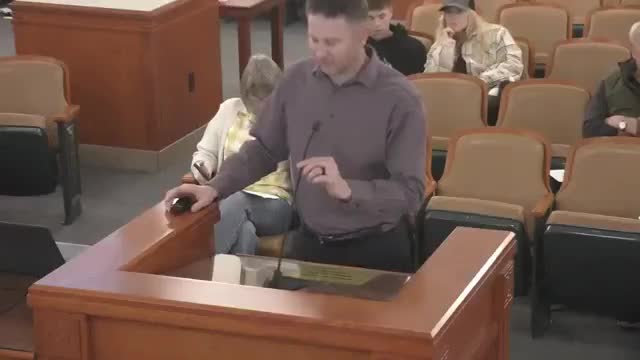
Summary
After a consultant presentation on Wall Avenue alternatives, the council voted to extend consideration of the Wall Avenue Corridor Plan (proposed resolution 2025-21) to allow further work with UDOT and additional public engagement; staff estimated a 4–6 month review period.
Ogden City Council on Oct. 21 paused final action on the Wall Avenue Corridor Plan and directed planning staff and consultants to work further with the Utah Department of Transportation (UDOT) and stakeholders to address mobility and safety concerns.
Jacob Farnsworth of Kimley‑Horn, the consultant working with the city, presented a preferred concept that retains existing vehicle lanes while adding traffic-calming features: medians with pedestrian refuge, bulb-outs, narrower travel lanes to reduce speeds, and a shared-use path on the west side to accommodate pedestrians and bicyclists. Farnsworth said the preferred alternative was chosen because it maintains vehicle throughput while increasing safety and multimodal access; the team identified other concepts—an elevated pedestrian overpass and an at-grade bypass tunnel—as either infeasible in the near term or too disruptive and costly.
Farnsworth told the council UDOT’s principal concern has been maintaining north–south mobility on Wall Avenue, which UDOT treats as a major regional corridor. UDOT indicated at earlier advisory meetings that it would not support removal of travel lanes; the consultant said the preferred plan preserves lane counts while using design and geometric changes to reduce speeds.
Public comment at the Oct. 21 meeting amplified differing views. Several residents, including Laura Lewis and Teresa Bramwell, urged the city to pursue more ambitious options—some urged full grade separation or undergrounding—citing pedestrian safety and truck traffic. Others, including Travis Pate and Paul Burt, supported traffic-calming measures and incremental improvements but warned about potential unintended congestion and safety problems if parking or curb geometry are not handled carefully.
Council members expressed similar divisions. Vice Chair Hyer said more time was prudent to digest public input and UDOT feedback. Planning manager Barton Brierley told the council that staff expects the project team will need four to six months to address UDOT’s comments and refine the plan. Hyer moved to extend consideration of proposed Resolution 2025-21; Council member Graff seconded. The council approved the extension on a voice vote. Hyer indicated staff will return with a timeline and additional public engagement; Brierley said staff will produce a public timetable by the council’s next meeting and noted the advisory committee prefers solutions that can be implemented in a 5–10 year horizon where feasible.
Consultants described eliminated alternatives: a pedestrian overpass was rejected because ADA-compliant ramps (roughly 250‑foot ramps) would eliminate on-street parking and landscaping and disrupt adjacent properties. A full bypass/tunnel option would require substantial utility relocations, dewatering due to a high water table, elimination of left-turns in some segments, and multi‑year, very high-cost construction, making it unlikely in the short term.
Council’s extension requests a focused response to UDOT concerns and additional stakeholder engagement; staff will return with a publicly posted timeline and a plan for in-person meetings to narrow the outstanding issues.