Get Full Government Meeting Transcripts, Videos, & Alerts Forever!
Get email alerts on the Election Timetable topic
No spam. Unsubscribe anytime.
Sponsors say House Bill 197 would standardize Ohio primary to first Tuesday after first Monday in May
Summary
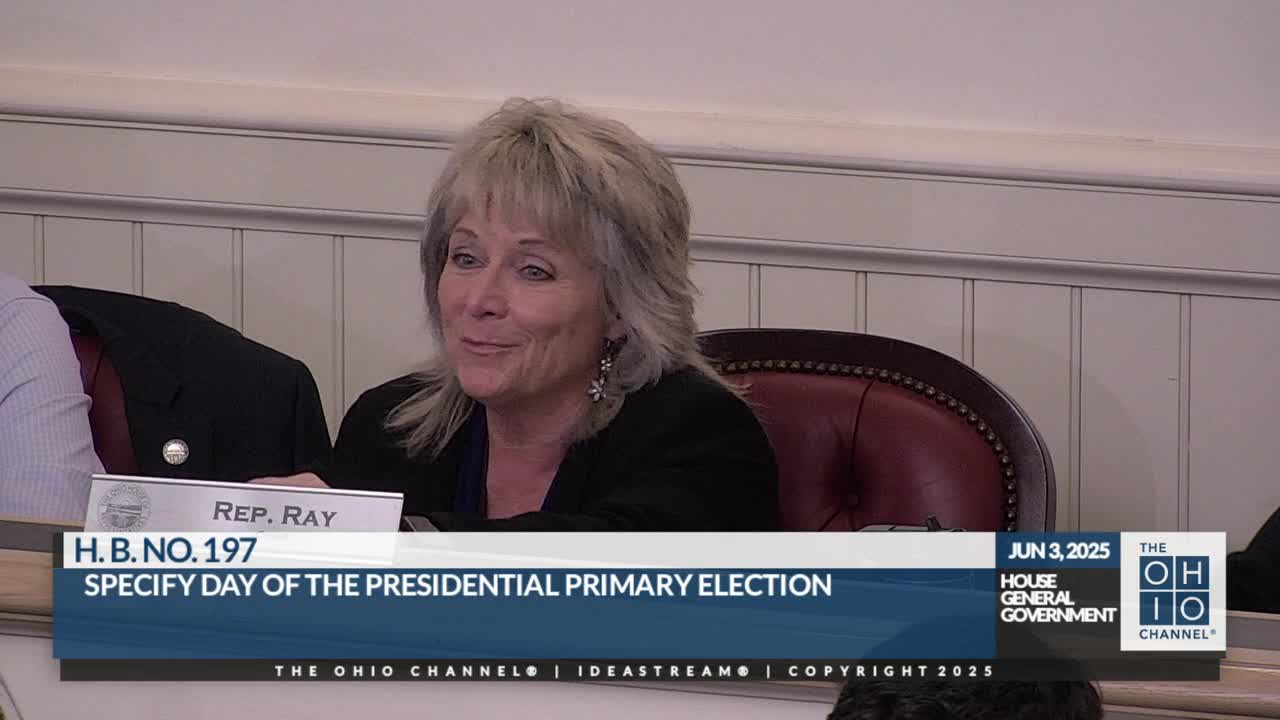
Sponsor testimony at the House General Government Committee supports moving Ohio’s presidential-year primary to the same May date used in non-presidential years, citing consistency, better weather, poll worker availability and reduced voter confusion; members asked about turnout, campaign timing and evidence.
Representatives Troy and Brown Piccolantonio told the House General Government Committee during the bill’s first hearing that House Bill 197 would set Ohio’s primary election date for presidential years to the same date used in other years — the first Tuesday after the first Monday in May — arguing the change would bring consistency for voters and election officials.
Representative Troy said the move would “minimize voter confusion” and shorten the election season by removing the special mid-March date the state uses in presidential years. He said candidates currently must file petitions many months before the actual November election and that a uniform May date would give election administrators more predictable planning timelines.
Sponsor testimony emphasized practical benefits for local boards of elections. Representatives Troy and Brown Piccolantonio noted Ohio’s 88 county boards and roughly 3,000 polling locations and said consistent scheduling would help boards recruit and staff precinct election officials. Representative Brown Piccolantonio said the change would “support our local boards of election in hiring election staff and procuring polling locations.”
Committee members asked several follow-up questions during the hearing. Representative John questioned whether moving the date to May would lengthen or shorten the campaign season for incumbents; sponsors answered that they expected a shorter overall campaign season by aligning primaries in May and November six months apart. Representative Sintenberg and others raised weather and turnout concerns, saying May typically offers better conditions than March in parts of the state and could improve participation. Representative Brent asked what resources local boards would gain from the change; sponsors pointed to statements of support from the Ohio Association of Election Officials and said the boards had expressed that consistent dates would reduce confusion and help recruit poll workers.
Members also discussed filing deadlines: sponsors said shifting to a May primary would place some filing deadlines roughly 90 days before the primary (early February), which they argued is more administrable than deadlines that presently fall in the prior calendar year. The sponsors said the proposal is bipartisan, has 13 cosponsors (including committee member Sandenberg), and that similar measures had been introduced in prior general assemblies.
No formal committee action was taken at the first hearing. Sponsors asked the committee to continue consideration and offered to provide additional data on turnout and poll-worker availability in later hearings.