
Planning commission reviews downtown traffic engineering study, schedules public outreach
Get AI-powered insights, summaries, and transcripts
Sign Up Free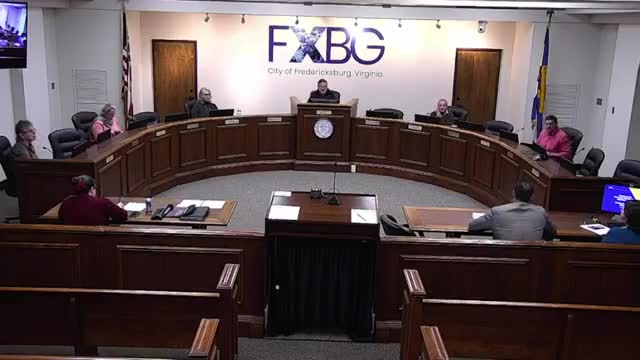
Summary
City planning staff transmitted a downtown traffic engineering study to the Planning Commission and asked commissioners to review planning-level concepts ahead of a Nov. 12 work session and a community meeting Nov. 13. Staff asked for written comments by Nov. 3; commissioners raised questions about parking, loading zones and truck maneuvers.
The Fredericksburg Planning Commission on Oct. 22 received a transmittal of the downtown traffic engineering study and scheduled a broader planning-level discussion for Nov. 12, followed by a community meeting Nov. 13, city staff said.
Planning staff presented the study and its background, noting the work grew out of the Area 7 downtown plan and that several corridor and trail improvements shown in the plan are now funded by the Virginia Department of Transportation and advancing to engineering and design. "We wanna hear from you all about the planning level concepts," staff said as he framed the upcoming public outreach.
The study tests whether older one-way traffic patterns in the downtown can be converted to two-way streets and whether on-street bicycle boulevards and off-street connectors can be added while maintaining traffic function. Staff told the commission the modeling indicates the conversions can work and would improve safety, but detailed design for specific intersections and curb treatments remains to be developed.
Commissioners and staff identified several topics they expect public comment to focus on at the November meetings: circulation and access to civic destinations such as the library and train station, phasing and funding, specific curb treatments and crosswalks, and parking impacts for residences and businesses. Staff urged commissioners to submit written comments by Nov. 3 to inform the staff report and responses to community questions.
Commissioner Mary Margaret Marshall urged patience from residents while changes proceed and emphasized safety: "The most important thing I think that people need to remember as far as the general public goes is that we're doing it for safety purposes," she said.
Members asked staff to provide more granular maps for community meetings, to show truck turning-movement analyses and to call attention to the study appendices that contain cost estimates and conceptual turning-movement diagrams. Staff pointed to Appendix K for cost estimates and an appendix with concept turning movements for intersections; they identified William and Amelia streets as places where on-street parking could be converted to loading zones and said Caroline Street’s plan preserves on-street parking while reducing travel lanes.
Staff said some elements are likely to be eligible for state funding while others may require local general-fund financing and CIP prioritization. The commission did not take a formal vote on policy at the Oct. 22 meeting; staff transmitted the study to the commission for review and will return for discussion and a public hearing sequence beginning Nov. 12.