Get Full Government Meeting Transcripts, Videos, & Alerts Forever!
Get email alerts on the Snap Asset Test Elimination topic
No spam. Unsubscribe anytime.
Committee backs bill to remove SNAP asset test; debate centers on costs and administrative burden
Summary
The committee voted 7-2 to recommit Senate Bill 529 to Appropriations. The bill would eliminate Indiana's $5,000 SNAP asset test; advocates argued it reduces administrative burden and helps families, while some senators expressed concern about fiscal impacts and requested further analysis.
Senate Bill 529, which would eliminate Indiana’s $5,000 asset test for SNAP eligibility, was recommitted to the Appropriations Committee after extensive testimony and a 7-2 committee vote.
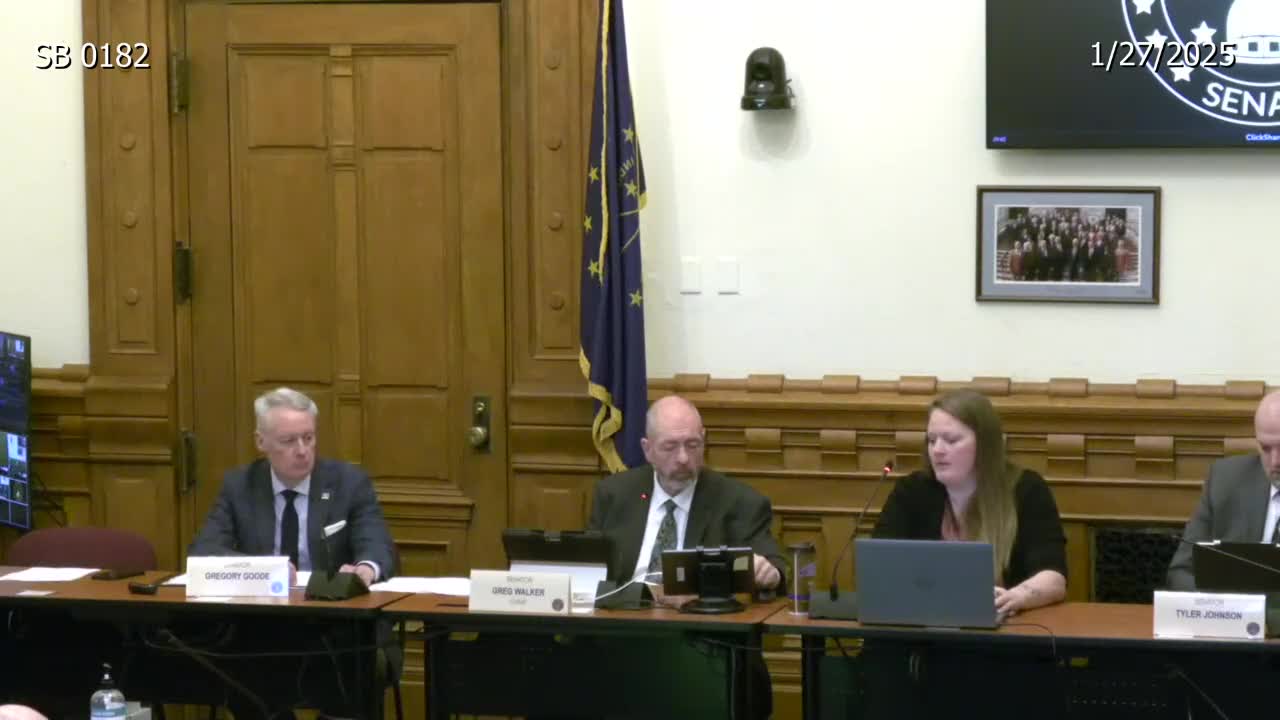
Sponsor Chairman Walker described the bill as a means to reduce paperwork and administrative costs and to remove a disincentive that discourages savings among people receiving SNAP. ‘‘This bill is to be recommitted to appropriations based upon the current reading of the financial impact statement,’’ Walker said, noting he hoped the fiscal note would be revisited before the bill reaches Appropriations.
Multiple witness organizations testified in favor: Erin Macy (policy researcher/advocate — affiliation not specified in transcript) told the committee a ‘‘single mom in Lebanon’’ lost SNAP for failing to submit paperwork while caring for a child with cancer. Macy and other witnesses argued the asset test imposes substantial verification work: Macy estimated Indiana processes about 450,000 distinct applications per year and projected that removing the asset check could save roughly 10 minutes per intake, totaling about 75,000 staff hours and about $1.3 million in administrative labor (approximately $656,000 in state-shared administrative savings, per Macy’s calculation).
Mark Lynch, director of advocacy for the Indy Hunger Network, said only a ‘‘minuscule’’ number of applicants are denied due to assets and urged elimination. Emily Bryant, executive director of Feeding Indiana’s Hungry, described the policy manual’s ‘‘51 pages’’ devoted to resources and said FSSA data showed roughly 273 applications per month denied for being over the asset limit during an 18-month sample (about 0.65% of applications). She also questioned the fiscal-note assumptions that would require hiring new caseworkers for every 600-case increase.
Committee members probed costs: one senator noted the fiscal note lists roughly $232,000 for personnel and other costs in 2026 and questioned whether administrative savings claimed by advocates would materialize. Sen. Schmidt said he would vote no, citing unknowns in fiscal impact. Sen. Gaskell also voted no. Chair Walker, Sen. Goode and others said they supported the bill’s policy aims and expected Appropriations to scrutinize the fiscal details.
The committee voted to recommit SB 529 to Appropriations, 7 in favor and 2 opposed. Sponsors and witnesses said they expect further fiscal analysis before floor consideration.