
TACIR: large tourism sales growth can raise county fiscal capacity and reduce state education aid share
Get AI-powered insights, summaries, and transcripts
Sign Up Free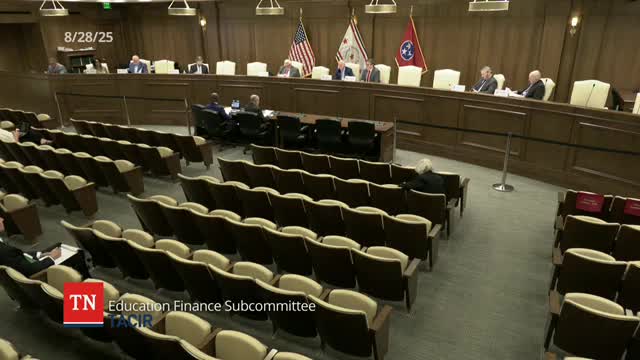
Summary
TACIR staff told the Education Finance Subcommittee that counties with large tourism-driven sales tax bases (notably Davidson and Sevier counties) have seen increases in measured fiscal capacity, which, all else equal, reduces their state share of education funding under TISA.
TACIR Research Director Michael Mount presented analysis showing growth in tourism-related sales tax revenue can increase a county's fiscal capacity in the commission's model and thus lower the state's share of K–12 funding for that county under the Tennessee Investment in Student Achievement Act (TISA).
Mount said tourism-generated tax revenues are an important part of the tax base in counties such as Davidson and Sevier. He cited state figures from February 2024 showing visitor spending generated significant state and local tax revenue and noted that "growing sales tax bases in these counties contribute to their fiscal capacities, though other variables contribute as well."
Mount showed that both Davidson and Sevier counties increased their share of statewide fiscal capacity over the past five years in the staff analysis and that, "all else being equal, increases in fiscal capacity for a county decreased its state share of education funding." He explained that TISA equalizes only base and weighted funding; direct and outcomes funding remain 100% state-funded and are not equalized.
Committee members emphasized that tourism economies also impose infrastructure and service costs not fully captured by a fiscal-capacity measure tied to tax bases. One member noted that daily population in a tourism-heavy county can exceed resident population and that infrastructure, security and other costs associated with visitors may not be reflected in tax-base measures alone. Director Lippert noted the model includes per-capita income measures partly to capture the resident ability to pay and that the commission's model sometimes produces different results than the University of Tennessee CBRE model for these counties.
Ending: Staff recommended the memorandum and findings be forwarded to the full commission; the subcommittee recorded no statutory or budget action at the meeting.