Get Full Government Meeting Transcripts, Videos, & Alerts Forever!
Get email alerts on the Open Meetings Trace Education topic
No spam. Unsubscribe anytime.
TREC counsel outlines Open Meetings Act changes; commission approves TRACE course provider and education slate
Summary
Program counsel reviewed the Open Meetings Act and updated guidance on remote attendance, public-records expectations and anti‑competitive limits for regulatory boards; the commission approved instructor applications and initial providers including TRACE course offerings.
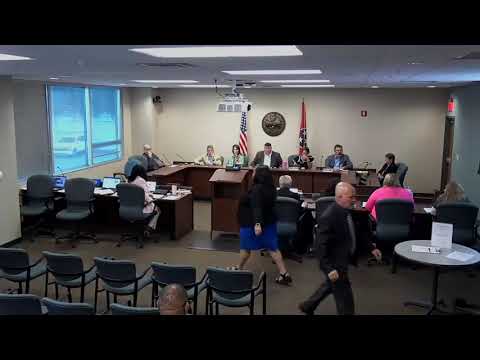
Program counsel Anna Matlock gave a detailed Open Meetings Act and public‑records presentation at the Tennessee Real Estate Commission’s August meeting, highlighting recent changes that affect how the commission must notice and conduct business.
Matlock reiterated the default presumption that documents and meeting deliberations are public records, reviewed the definition of a “meeting,” and explained exceptions, including executive session (limited to narrowly defined circumstances such as threat of litigation). She explained a legislative change effective July 1, 2025, that allows remote attendance to count toward a quorum and requires audible identification of remote speakers; roll-call voting is required when remote attendance is used. She also said the law now requires each governing body to meet physically at least once per calendar year. Matlock warned that violations of the Open Meetings Act can lead to nullification of board action and assessment of litigation costs and attorney fees.
Matlock also summarized the U.S. Supreme Court’s decision in North Carolina State Board of Dental Examiners v. FTC and its administrative consequences: boards must avoid regulatory steps that function as anti‑competitive protection for a licensed profession unless there is active state supervision and a clearly articulated state policy justifying the restriction. For TREC this means the commission must stay within statutorily authorized scopes and work with supervising officials when policy could constrain unlicensed practice.
Education report and TRACE rollout. Education Director Britney Morris presented certification materials for instructor applicants and continuing‑education courses. The commission approved 29 instructor applicants and 48 courses submitted by providers under TREC rules. Notably, commissioners approved two TRACE course offerings (classroom and paper‑and‑pencil formats) from a provider listed in the agenda (D and D School Real Estate). Staff said providers had only learned about TRACE at a July 9 webinar, and the two TRACE course approvals represent a quick initial rollout.
The commission also adopted a 2026 meeting calendar that alternates locations and starts a rotation to hold at least one meeting in East or West Tennessee every other year; commissioners approved the schedule unanimously.
Matlock’s guidance and the education approvals together affect how TREC will manage hearings, remote participation, and the new TRACE training requirement that the commission has begun placing on applicants in specific reinstatement cases.