
SFPUC outlines FY21–22 budget timetable, flags recruitment and resilience themes
Get AI-powered insights, summaries, and transcripts
Subscribe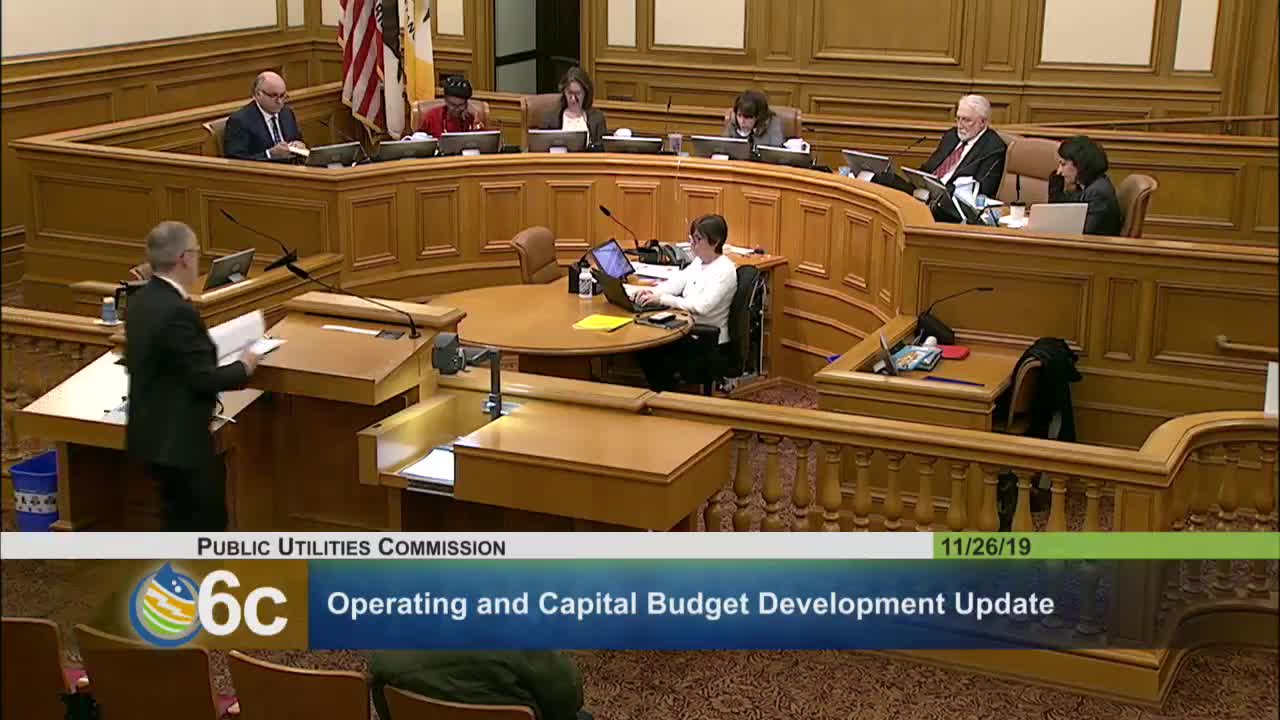
Summary
Deputy CFO Charles Pearl presented the commission with the schedule and emerging themes for the two‑year operating and capital budget, including a 3% baseline increase for operations and emphasis on recruitment, temporary‑to‑permanent conversions, wildfire mitigation and affordability checks tied to a 10‑year financial plan.
Charles Pearl, Deputy Chief Financial Officer for the San Francisco Public Utilities Commission, briefed commissioners on Nov. 26 on progress developing the two‑year operating and capital budgets for fiscal years 2021–22.
Pearl said the PUC opened systems for operating and capital submissions after a Sept. 10 kickoff and that staff are reviewing submissions through December before four budget hearings beginning Jan. 9 and a planned commission adoption on Feb. 11; the PUC’s submittal will then go to the mayor’s office and the controller for the city’s budget process and a Board of Supervisors hearing on May 1, he said. The schedule, Pearl noted, follows the city’s administrative-code timing.
On the operating side, Pearl said staff “did allocate a 3% increase for our operations and maintenance costs” as the baseline and that assistant general managers could submit requests above that baseline for new programs or increased service levels. He identified emerging themes that will appear in package materials: recruitment and human-resources capacity, conversions of temporary positions to permanent roles, workplace health and safety, wildfire mitigation, regulatory response and operations for new facilities coming online.
On capital planning, Pearl said the PUC has convened steering and working groups and hired a consultant to compare SFPUC capital-planning practices with best practices; capital themes will include dam safety, water-supply diversification, sanitary system improvement program (SSIP) work and transmission and local generation projects tied to CleanPowerSF’s first capital plan. He said the PUC’s 10‑year financial plan will act as an affordability check on operating and capital proposals.
Commissioners pressed staff on goals for the budget messaging and affordability. Pearl said the agency will present broader “department‑wide” themes so that individual bureau budgets show how they fit the whole; he also said staff are working to integrate the three revenue streams that customers see into a unified affordability narrative. Several speakers urged that new program funding be paid for with operating savings where possible and that temporary‑to‑permanent conversions be evaluated as if they were new permanent positions.
Why it matters: the FY21–22 budget will set staffing and capital priorities for SFPUC’s water, power, wastewater and CleanPowerSF enterprises; staff signaled more attention to resilience (wildfire, climate), recruitment and affordability checks that could shape rate projections when the commission considers the full budget in January and February.
Pearl and staff did not request a budget action at the meeting; they said budget hearings would present line‑item proposals and affordability scenarios in January and February.