Get Full Government Meeting Transcripts, Videos, & Alerts Forever!
Get email alerts on the Wildlife Management topic
No spam. Unsubscribe anytime.
Tennessee Wildlife Resources Agency pauses proposed license and fee changes after committee concerns
Summary
The Tennessee Wildlife Resources Agency presented three related rule changes — moving a $10 boater-exam fee from statute to rule, a CPI-based boat registration adjustment and a broad package of license and permit increases — and withdrew the largest package after committee concern.
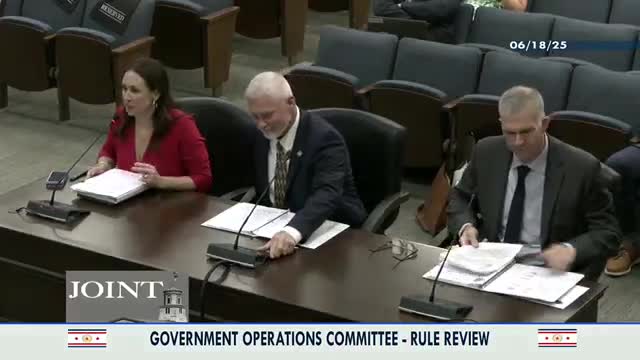
The joint Government Operations Committee considered three rule packages from the Tennessee Wildlife Resources Agency (TWRA): moving the $10 boater safety exam certificate fee from statute to rule, an across-the-board boat registration fee increase tied to a 22% consumer price index (CPI) adjustment, and a broader proposal raising many license and permit fees to address a budget shortfall.
Blair Beatty, TWRA legislative director, told the committee the move of the $10 boater safety exam certificate fee "is not being adjusted" and was made to comply with Public Chapter 214, which allows online boater education exams. The committee approved that change with positive recommendations in both chambers.
On the boat registration rule (item 4), TWRA said registration fees were being increased across the board to account for a 22% CPI rise since 2019. For example, the agency said a boat over 16 feet but under 26 feet would increase from $29 to $35 for a one-year registration. After questions about fee justification and whether registrations are transferable, the committee advanced the registration fee changes; the Senate vote recorded seven ayes and one no.
The committee spent the most time on a broader TWRA proposal to raise many license and permit fees, which the agency said would produce roughly $12 million annually and help cover rising costs including a 40% increase in salaries since 2016 and higher operating expenses. TWRA Executive Director Jason Maxon and Deputy Director Frank Fis described habitat, hatchery and enforcement work supported by license revenues, saying the agency funds most operations through license and permit sales and receives federal reimbursements tied to those sales. TWRA noted some popular licenses would rise by differing percentages to reflect a targeted approach rather than a blanket CPI change; for example, the resident combo hunting and fishing annual license was proposed to increase from $32 to $44.
Several committee members said the fee package risks pricing out low-income hunters and anglers, noted the agency relies heavily on user fees, and urged a longer-term, hybrid funding approach that could include a small dedicated sales tax allocation or other legislative support. Representative Mackenzie, Senator Faizon and others pressed for alternatives to recurring fee increases; multiple legislators said the committee should consider whether certain agency costs are state responsibilities rather than items chargeable to sportsmen. Senators and representatives from rural and tourism-dependent districts warned raising nonresident fees sharply could harm local businesses that depend on out-of-state visitors.
After sustained questioning and an offer from several legislators to pursue a hybrid funding solution and additional analysis, TWRA said it would withdraw the comprehensive license-fee amendment and work with committee leaders on a longer-term funding approach. Executive Director Maxon told the committee he had asked agency counsel to withdraw the rule and would meet the Fish and Wildlife Commission to revisit the package. The committee asked for written confirmation and a timeline for the withdrawal.
Why it matters: The proposed license fee changes would affect hunters, anglers, boaters and businesses that serve outdoor recreation across Tennessee. TWRA officials said the agency faced a deficit tied to salary adjustments and operating cost increases; legislators expressed divided views about whether fee increases are the right funding mechanism.
Actions and votes recorded in committee: the boater safety exam fee move and the boat registration CPI-linked increases both received positive recommendations (the boater exam move passed by voice with unanimous committee support; the registration increases passed with a 7-1 Senate tally). The broader license-fee package was withdrawn by the agency after the committee signaled interest in exploring alternative funding models. TWRA said the $12 million revenue estimate represented the expected additional revenue from the proposed license changes; agency officials said their current operating budget is approximately $130 million.