Get Full Government Meeting Transcripts, Videos, & Alerts Forever!
Get email alerts on the Empower Customer Notice topic
No spam. Unsubscribe anytime.
PSC asks utilities to develop consolidated customer notices linking Empower Maryland programs with federal and state incentives
Summary
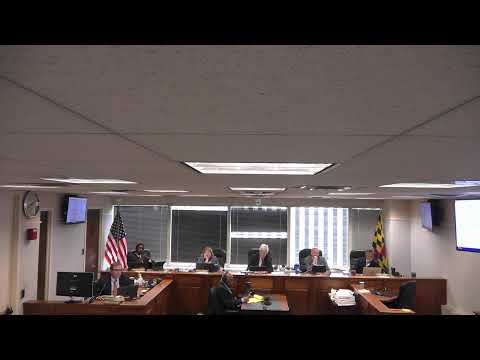
The Public Service Commission on Oct. 29 discussed how utilities should notify customers about Empower Maryland programs and related federal and state rebates and tax credits, but the commission did not adopt any regulation at the hearing.
The Public Service Commission on Oct. 29 discussed how utilities should notify customers about Empower Maryland programs and related federal and state rebates and tax credits, but the commission did not adopt any regulation at the hearing.
Commissioner Plutchman, who raised the concern, said customers “don’t really care if it’s Empower or not. They they care about about the fact that it’s effective for them,” arguing that notices should be useful and actionable rather than merely duplicative. Commissioners and utility representatives spent the hearing discussing where and how to place information so customers — especially those without reliable internet access — can find and use it.
The discussion focused on whether utilities should add federal and state incentive information to existing Empower Maryland communications or instead produce a separate direct notice. Jacqueline Zikus, a BGE representative, described options the company can use at low cost, including a quarterly bill newsletter called Smart Energy News and bill inserts. Zikus said printing a one‑sided bill insert “typically runs about $7,000 for just one-sided. If we wanted to do back and front, which we could, that will cost about $14,000 to print.” She also estimated a roughly $5,000 cost to create a new targeted email.
Representatives for Washington Gas and the PHI companies said they prefer to leverage existing marketing and customer engagement channels (email, website, social, bill inserts) rather than create a new standalone notice that would add cost. Several utility speakers noted they already post incentive information on Empower program pages on their websites and can arm call centers and outreach staff with talking points to help customers who call for more information.
Commissioners asked whether utilities can target communications by customer type (owner vs. renter) and whether utilities can reach paper‑bill customers; BGE said about 40% of its customers receive paper bills and that its account data can indicate whether an account is a renter or homeowner, though utilities described that as a work in progress. PHI noted it does not maintain a quarterly newsletter and that a separate bill insert would represent an additional cost.
Commission staff confirmed there is no immediate regulatory deadline tied to the rulemaking. The commission chair directed that no regulation be adopted at the hearing and asked the parties to convene a work group to develop a consolidated communications approach that would link Empower Maryland program information with federal and state rebates and tax credits. The chair suggested twice‑yearly (spring and fall) notifications as a likely cadence, while leaving the final approach to the work group’s recommendations.
The hearing record includes discussion of where Empower marketing dollars may lawfully be used; utility representatives noted that Empower program funds are aimed at promoting greenhouse gas reductions and that some marketing tied to Empower is funded through program dollars. Utilities suggested pointing customers to central resources (including program microsites and the Maryland Energy Administration) and using existing outreach tools where possible to minimize cost.
No formal vote or regulation was adopted at the hearing. The commission’s next steps are to convene the staff/utility work group and return with recommended notice language and a plan for targeted customer outreach.