Get Full Government Meeting Transcripts, Videos, & Alerts Forever!
Get email alerts on the Harm Reduction Syringes topic
No spam. Unsubscribe anytime.
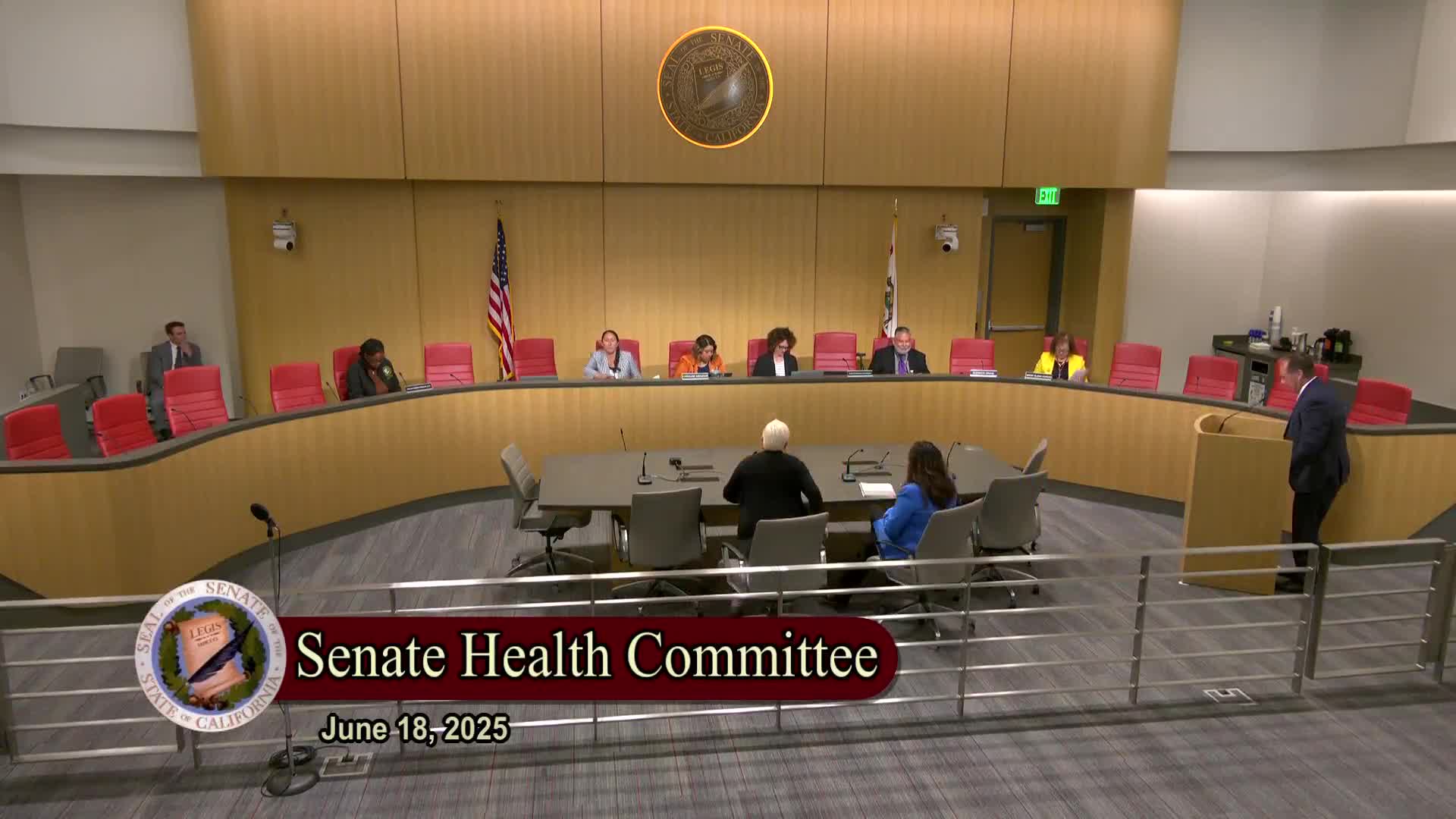
Committee advances bill to keep nonprescription syringe access at pharmacies to reduce HIV and hepatitis transmission
Summary
AB 309 would remove sunset dates and preserve pharmacy nonprescription syringe access and a possession clarification to reduce HIV and hepatitis transmission.
Assemblymember (presenter identified in transcript as Assemblymember Zibur) presented Assembly Bill 309 to remove sunset provisions and preserve statutes that allow pharmacists to sell sterile syringes without a prescription and to clarify that possession of sterile syringes and hypodermic needles for personal use is not a crime.
Supporters framed the bill as a public-health measure to reduce HIV and hepatitis B and C transmission and to support treatment adherence. Michelle Rivas of the California Pharmacists Association said AB 309 "removes the sunset on a vital public health provision, allowing pharmacists to continue providing non prescription access to syringes." She said pharmacists also help with syringe disposal and can refer patients to treatment and testing services.
Laura Thomas of the San Francisco AIDS Foundation, a bill cosponsor, told the committee pharmacy access to syringes is essential to statewide prevention strategies and that the evidence shows these programs reduce syringe sharing and disease transmission without increasing drug use.
Witnesses from public-health and advocacy organizations registered support, including Clifton Wilson for the City and County of San Francisco, Glenn Backus for Drug Policy Alliance, Isabella Argueta for the Health Officers Association of California, Planned Parenthood affiliates, county health officials, emergency physician groups and others.
Committee members asked about funding and accessibility. In response, witnesses said syringes sold at pharmacies are typically purchased by individuals and not directly paid for by the state; free syringes are sometimes provided through harm-reduction programs funded by other sources. The panel cited research showing long-term program experience and no increases in drug use tied to pharmacy syringe access.
The committee moved to pass AB 309 and refer it to the Senate Committee on Business, Professions and Economic Development. The motion was recorded as passed; the roll call shows the bill out of committee on a recorded vote of 8 yes, 2 no, 1 not voting.
Ending: With broad testimony from pharmacy and public-health organizations and no formal opposition recorded in the room, the committee advanced AB 309 to the next committee for further consideration.