Get Full Government Meeting Transcripts, Videos, & Alerts Forever!
Get email alerts on the Waste Management topic
No spam. Unsubscribe anytime.
Encinitas updates on SB 1383 rollout, EDCO anaerobic digester expansion and outreach
Summary
City staff and EDCO told the Environmental Commission the city is meeting state SB 1383 access requirements while pursuing more food-recovery, construction-and-demolition diversion and an expanded anaerobic digestion capacity; commissioners pressed for clearer battery disposal options after recycling-facility fires.
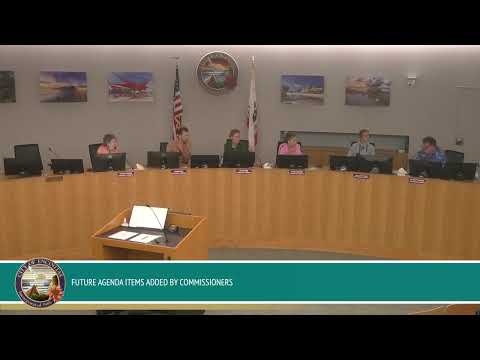
Paul Meckler, the city’s zero-waste program administrator, and Matthew Cleary, general manager of North County EDCO, gave the City of Encinitas Environmental Commission an update on SB 1383 implementation and local zero-waste efforts at the June meeting.
“Good evening, commissioners. Paul Meckler, 0 waste program administrator for the city of Encinitas. I'm joined to my right by Matthew Cleary, general manager of North County EDCO, our partner in all of this. We're here to give an update on the 0 waste program,” Meckler said as he opened the presentation.
The presentation summarized state regulatory drivers — including AB 939’s diversion targets and SB 1383’s requirements to reduce short‑lived climate pollutants by diverting organic waste — and described city and contractor activities to meet those mandates. Meckler and EDCO provided year‑to‑date diversion figures, outreach work, enforcement statistics and planned projects for the coming year.
Why it matters: SB 1383 requires jurisdictions to provide organic recycling access for residents and businesses and to increase edible‑food recovery; meeting the law both reduces landfill methane and supplies surplus food to recovery organizations. The commission heard that Encinitas is largely compliant with access requirements but still must increase diversion to meet the city’s Climate Action Plan disposal target of 3 pounds per person per day by 2030.
Key program details
- Access and compliance: Meckler said the city’s generator outreach and collection access efforts are complete enough that “Encinitas residents and businesses are 100 percent compliant with 13 83, meaning that nearly the nearly 20,000 generators within the city have a green organics container and the ability to recycle organic waste.”
- EDCO capacity and services: Matthew Cleary said EDCO’s anaerobic digestion (AD) facility currently processes up to about 93,000 tons of organic material per year; EDCO is adding two digestion vessels that will double capacity to an estimated 186,000 tons, with the expansion expected to be online roughly a year from now. Cleary also described EDCO’s regional material recovery facilities, household hazardous waste subcontracting with Clean Earth, and community events such as shredding and e‑waste collection.
- Diversion and recovery numbers: The presenters reported that the city diverted roughly 29,991 tons in the latest full reporting period (about 39.7 percent of materials generated citywide) and that organic tons increased year over year. Meckler said food‑donation reporting by generators totaled about 679,000 pounds in the prior reporting cycle; participating food‑recovery organizations reported about 519,000 pounds recovered (some donations cross jurisdictional lines).
- Edible food recovery: Meckler said the city has identified 16 Tier‑1 and 29 Tier‑2 qualifying food generators under SB 1383 (Tier‑1 typically grocery stores; Tier‑2 typically larger restaurants, venues, some health‑care cafeterias and schools). The city logged 16 formal edible‑food inspections, 44 outreach instances, and nine technical consultations during the reported period.
- Outreach and technical assistance: EDCO described an outreach campaign to multifamily property managers and residents (about 20–25 percent complete with a September 30 target), development of an online zero‑waste toolkit for businesses (targeted October 2025), school videos in English and Spanish, and monthly mulch/compost giveaways and community events (including a sustainable solutions fair on June 22).
Enforcement and compliance approach
Meckler said inspections and enforcement are part of the toolkit; staff reported 65 inspections across edible‑food recovery, construction and demolition (C&D), and commercial organics, and nine enforcement cases for noncompliance. He described a preference for education and technical assistance before issuing enforcement notices and said inspections will increase in focus on front‑of‑house organics for restaurants and multifamily settings as staff pair enforcement with the new business case studies and toolkit.
Questions from commissioners and public
Vice Chair O'Connor praised EDCO’s work and recommended tours of the AD facility. “It’s really inspiring… I love the anaerobic digester,” she said, encouraging colleagues to tour the facility.
Commissioner Parker asked specifically about battery disposal and availability. “We really need some sort of battery disposal that's going to be convenient,” Parker said, noting safety concerns and the need for more accessible drop‑off options than occasional City Hall events.
Paul Meckler and Matthew Cleary responded that free door‑to‑door universal waste collection is available by appointment through EDCO (Clean Earth is the subcontractor) and that universal waste pickup generally involves a small fee that is waived for residents 65 and over; Meckler provided a contact number for scheduling pickups. Cleary and Meckler also emphasized that universal waste collection includes batteries, e‑waste and light bulbs.
Facility safety and contamination concerns
EDCO staff and speakers noted a recent uptick in fires linked to improperly disposed batteries and other hazardous items. Cleary (and EDCO staff later in the discussion) said the division has experienced recycling‑facility fires, route truck fires and transfer‑trailer fires this year; staff said they suspect batteries and improperly discarded vape devices are a frequent cause. EDCO urged residents to use available collection programs and avoid placing batteries in curbside bins.
Construction and demolition (C&D) and reuse
Both presenters highlighted C&D diversion gains (reported increase from roughly 10 percent to 15 percent year over year) and said the city has revised waste‑management forms tied to building permits and plans to increase field inspections to verify promised diversion rates. Meckler and Cleary said the city is prioritizing diversion opportunities where they expect the largest reductions: commercial organics, multifamily organics and C&D materials.
Outlook and next steps
Meckler said Encinitas is currently exceeding some interim targets (an interim CAP disposal goal of 5.3 pounds per person per day) but acknowledged more work is required to reach the 2030 goal of 3 pounds per person per day. Planned actions include continued multifamily outreach, a business toolkit and case studies, doubling AD capacity at EDCO, expanded procurement and distribution of compost/mulch, and continued edible‑food recovery partnerships with local food‑recovery organizations (Community Resource Center, Saint Andrews and Produce Good).
Votes at a glance
The commission approved routine procedural items during the same meeting: a motion to approve the previous meeting’s minutes and a motion to approve the commission work‑plan update. Both motions passed on voice vote with commissioners indicating “Aye.”
Ending
Commissioners thanked staff and EDCO for the presentation and asked staff to follow up on specific requests — notably clearer battery disposal options and continued outreach to hard‑to‑reach multifamily residents — as the city implements SB 1383 requirements and pursues greater diversion.