
Sustainability groups and parents press Princeton board on electric buses, Ciclovia and smartphone harms
Get AI-powered insights, summaries, and transcripts
Subscribe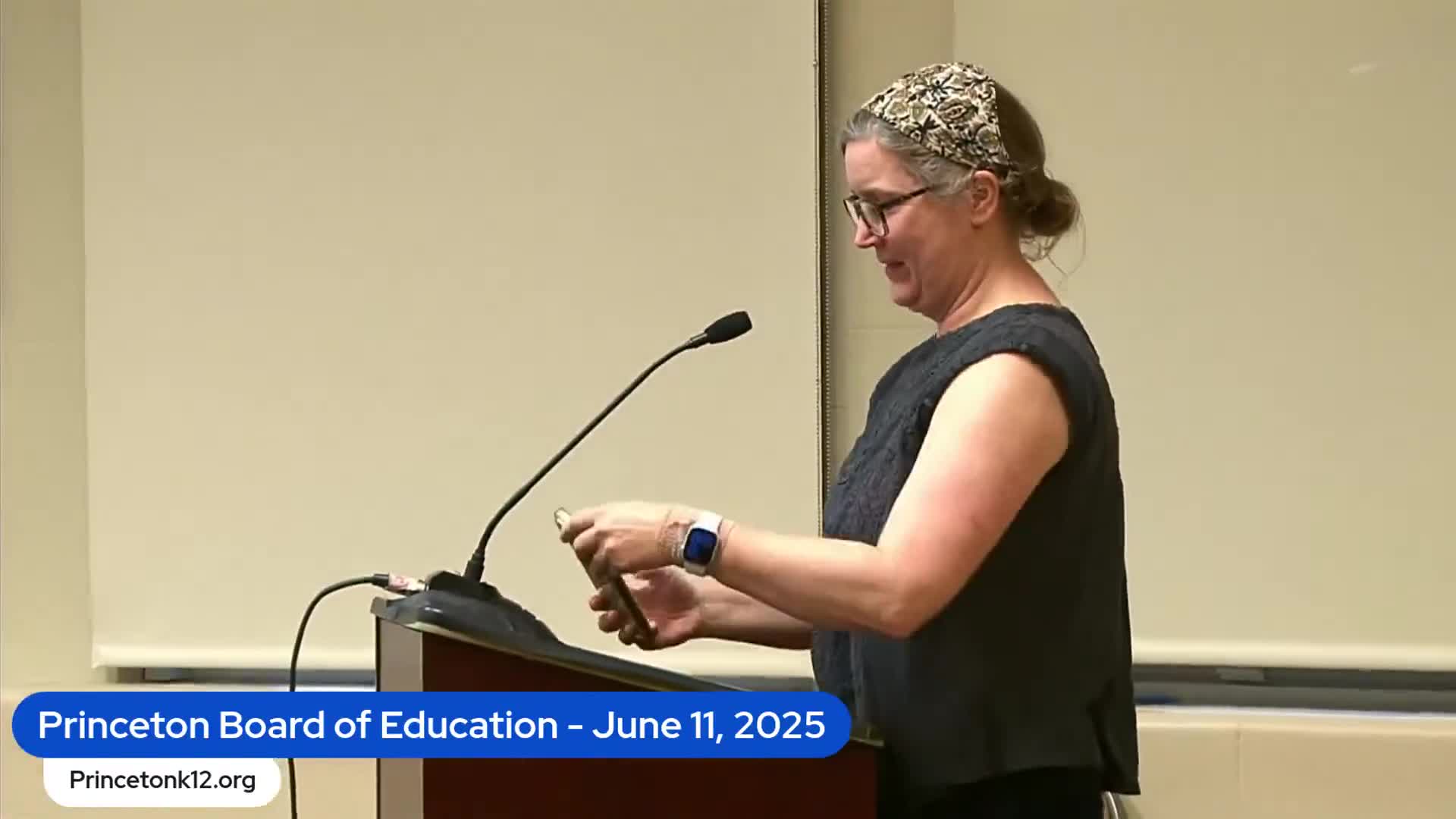
Summary
Public commenters thanked the district for sustainability partnerships and invited the board to a Ciclovia event; parents urged the board to study harms of smartphones for students and one family announced plans to leave the district citing political concerns.
Three public commenters addressed the board during the meeting’s public-comment period, focusing on sustainability partnerships, a community street event and concerns about student smartphone use.
Christine Simonton, executive director of Sustainable Princeton, thanked the board and district staff for collaboration on sustainability initiatives including the "power down for pizza" energy‑use campaign and the district’s recent efforts to apply for funding for two electric school buses and charging equipment. Simonton invited the board and the public to Ciclovia Princeton on Sunday, June 22 from 10 a.m. to 2 p.m. on Walnut Lane between the middle school and the high school. "There will be games, dancing, yoga, and more," she said, and noted the event is organized with Sustainable Princeton, the Arts Council of Princeton, and the municipality’s pedestrian and bicycle advisory committee.
Thomas Perk, a Chestnut Street resident, told the board his family plans to leave the United States and the district and criticized what he described as "bad actors" and politicization within local governance. Perk urged parents in Princeton to consider creating an endowment to protect district programs from political interference and cited concerns about continuity of services such as speech therapy if funding priorities change.
Anne Dechter, a parent of two district students, urged the board to study and consider interventions related to smartphones and social media. Dechter said a parent-led pledge at Riverside to delay giving children smartphones until age 16 has gathered local support and asked the board to formally study the issue, noting documented links between smartphone use and anxiety, depression, and social harms among youth. "I implore you to consider what the board can do to help families," she said, requesting that the district investigate possible interventions that could reduce harms while preserving safety and connection.
Each commenter framed requests to the board: Sustainable Princeton asked for continued partnership and participation in a public event; Perk provided notice of a family decision and called for private funding mechanisms; Dechter requested a formal board study of smartphones and social media impacts on students. Board members acknowledged the comments and thanked the speakers.
The district did not take formal votes related to the public-comment requests at this meeting; each request was made on the public record for potential administrative follow-up.