Get Full Government Meeting Transcripts, Videos, & Alerts Forever!
Get email alerts on the Reproductive Emergency Care Abortion Emergency Law topic
No spam. Unsubscribe anytime.
AB 40 would clarify California emergency-care law covers reproductive emergencies including abortion
Summary
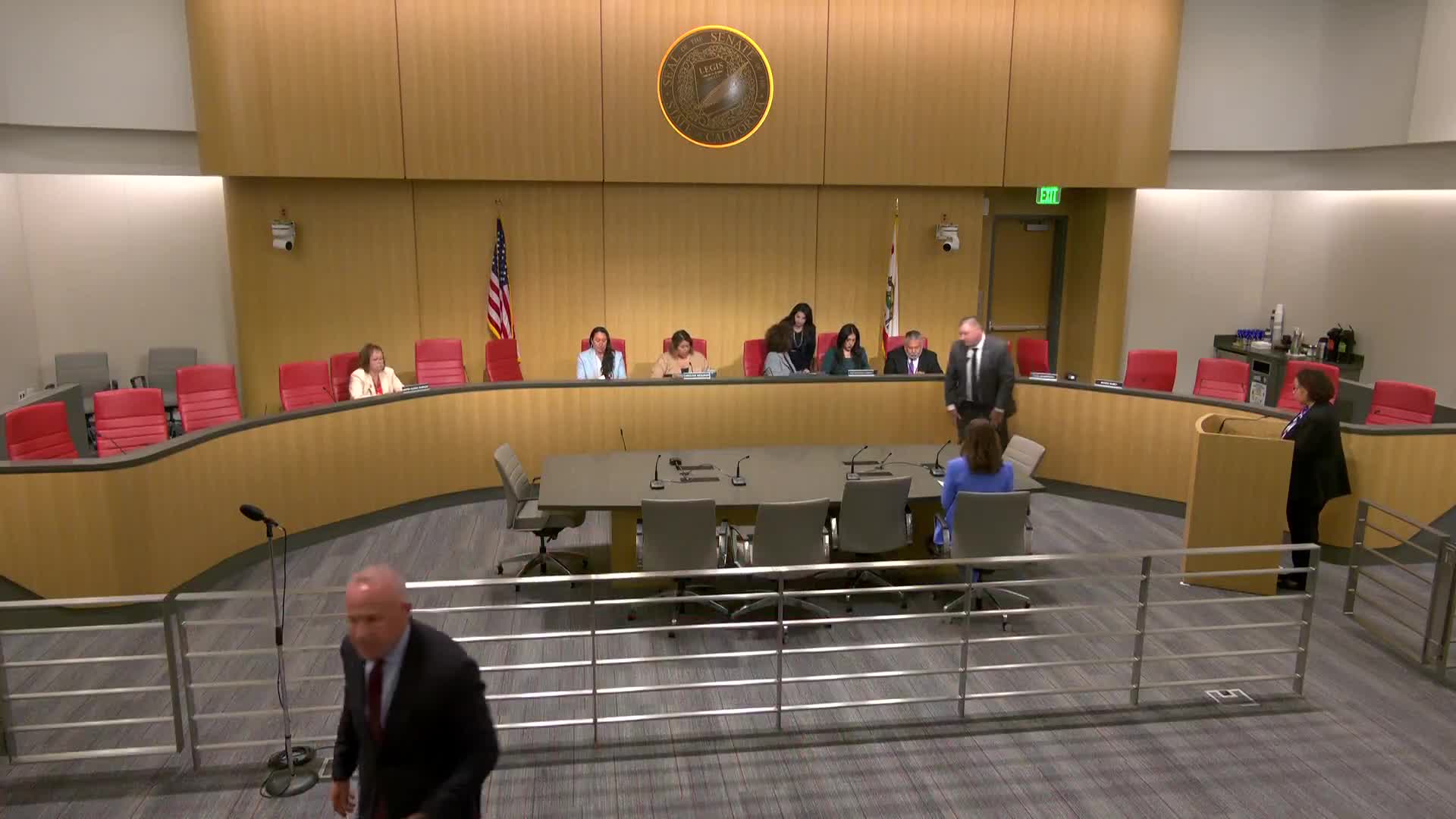
AB 40 would amend California emergency-services law to explicitly state that reproductive health services, including abortion, are covered emergency care; supporters said the change is needed after recent federal guidance changes, opponents raised concerns about singling out abortion.
Assemblymember (author) opened the AB 40 presentation by saying the bill "simply clarifies that state law defining emergency services includes reproductive health services, including abortion." She framed the bill as a response to recent federal action withdrawing guidance around the Emergency Medical Treatment and Labor Act (EMTALA), saying the change has created confusion for providers.
"No one facing an emotional, vulnerable, and potentially life‑threatening emergency should be denied care, told to go home, or forced to drive to the next hospital," Assemblymember Bonta told the committee. "Abortion is health care, including emergency care. And this bill makes it clear, in California, we treat it as such."
The California Medical Association's Angela Hill testified in support and said, "Physicians must be able to provide timely evidence‑based emergency care to stabilize patients and prevent avoidable harm." Hill described situations — ectopic pregnancy, severe preeclampsia, sepsis — in which delays, including delays to provide an emergency abortion when medically necessary, can cause permanent injury or death.
Opponents raised legal and policy concerns. John Gerardi, an attorney representing a nonprofit clinic, said AB 40's singling out of abortion "could give the appearance of being prescriptive and pressuring physicians toward abortion" and questioned whether existing EMTALA and hospital protocols already address emergency care needs. He also raised questions about possible interaction with the federal Weldon Amendment and whether the bill could prompt non‑emergency use of emergency departments.
Committee members asked for evidence about how frequently California hospitals have denied emergency reproductive care; the author and witnesses pointed to recent press reports of at least one high‑profile case in which a patient said she was turned away and to broader concerns that federal guidance removals had created uncertainty for providers.
The committee moved AB 40 to appropriations on a motion by Senator Richardson. The transcript records the bill reported out with a roll-call result recorded later as 7 yes, 2 no, 1 abstention.
Why it matters: supporters say AB 40 clarifies state law to ensure providers can deliver medically necessary emergency reproductive care without fear of federal enforcement uncertainty; opponents say the provision risks singling out a single medical service and raised legal questions.
Next steps: AB 40 was referred to the appropriations committee; sponsors urged continued outreach to hospital systems to ensure clinical practice aligns with the statutory language as it moves forward.