Get Full Government Meeting Transcripts, Videos, & Alerts Forever!
Get email alerts on the Behavioral Health Fsp Presumptive Eligibility topic
No spam. Unsubscribe anytime.
Bill would let providers enroll homeless Californians with severe mental illness in wraparound care while eligibility is verified
Summary
AB 348 would create presumptive eligibility so providers can enroll people experiencing homelessness and severe mental illness into Full Service Partnerships (FSPs) immediately, sponsors say; counties and some behavioral health directors expressed concerns about operational impacts and standards.
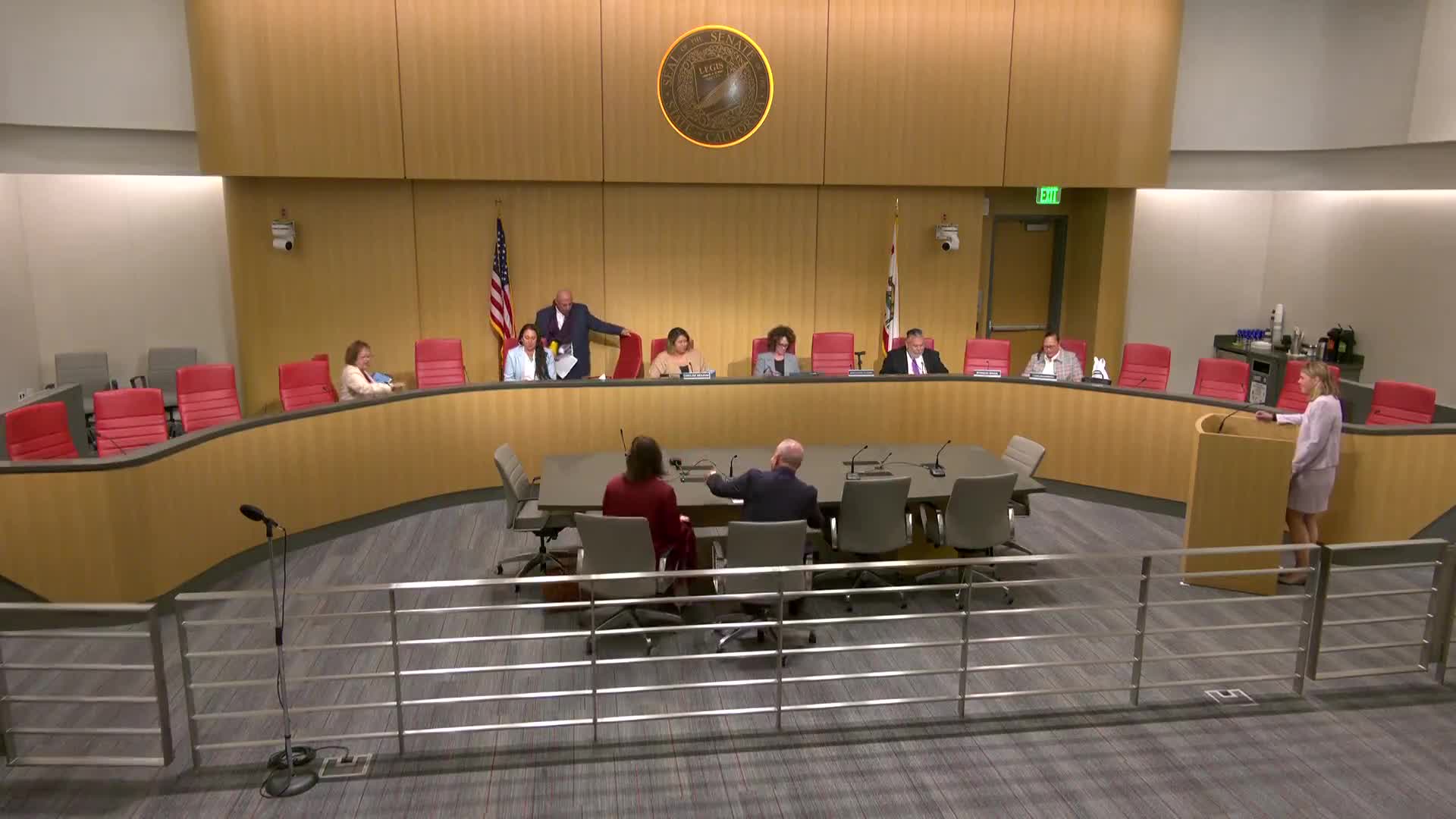
Assemblymember Maggie Krell, presenting Assembly Bill 348, told the Senate Committee on Health that the bill “streamlines some of our most vulnerable patients in California who are cycling between homelessness, severe mental illness, and even incarceration.” The proposal would allow providers to make presumptive enrollments into county-funded Full Service Partnerships (FSPs) while eligibility is being verified, sponsors said.
"Only about 40% of FSP slots go to that population," said Darrell Steinberg, founder of the Steinberg Institute and former Senate president pro tem, summarizing the bill's intent to refocus FSPs on people experiencing homelessness with severe mental illness. "Presumptive eligibility is what we call it," he said, describing a mechanism that would let providers enroll people immediately rather than wait weeks or months for county approvals.
The bill's sponsors framed AB 348 as an attempt to restore the original intent of California's Full Service Partnerships, which grew out of AB 34 and AB 2034 and were expanded under Proposition 63 (the Mental Health Services Act). Steinberg told the committee that Prop 63 has generated "31 plus billion dollars of funding for public mental health since 2004" and argued that the bill would reduce cycling through emergency rooms, jails and shelters by allowing faster access to wraparound services.
Supporters at the hearing included the California Medical Association, Vera Institute for Justice, League of California Cities, California Behavioral Health Association (cosponsor), Housing California and a range of local and statewide advocacy groups. Several speakers described the clinical and social harms of delayed access to FSP-level care.
The County Behavioral Health Directors Association of California testified as "opposed unless amended," and Los Angeles County officials recorded an opposed position, citing operational concerns. Amara Sheid of the County Behavioral Health Directors Association said conversations with the bill sponsor were ongoing but that counties were worried about how presumptive enrollment would work in practice. A county representative from Los Angeles noted examples of multi‑week waits and urged continued negotiation.
Committee members asked sponsors to engage further with county officials. Senator Gonzales urged the author and sponsors to address county concerns. Assemblymember Krell acknowledged the conversations and said she would continue discussions with counties and providers.
The committee moved AB 348 out of the Senate Health Committee for referral to appropriations; the motion was made by the vice chair. The transcript records the item on the committee's roll calls and later shows the bill reported out with a recorded final vote count of 9 yes, 0 no.
Why it matters: sponsors and mental-health advocates say presumptive enrollment could shorten the time people with severe needs wait for comprehensive wraparound services and reduce repeated hospitalizations and incarcerations. Counties warned that implementation details matter and said the measure requires further technical work to avoid unintended consequences.
The author and sponsor teams said they will continue to negotiate operational details with county behavioral health officials as the bill moves to the next committee.