Get Full Government Meeting Transcripts, Videos, & Alerts Forever!
Get email alerts on the Community Programs topic
No spam. Unsubscribe anytime.
Tree Board to rewrite Flower Award criteria, expand outreach to businesses and schools
Summary
Members agreed to revise the Flower Award scoring and outreach plan, suggesting clearer 'curb appeal' language, reweighting points away from a heavy native‑plant emphasis, and boosting promotion via the village newsletter, Chamber and code enforcement nominations.
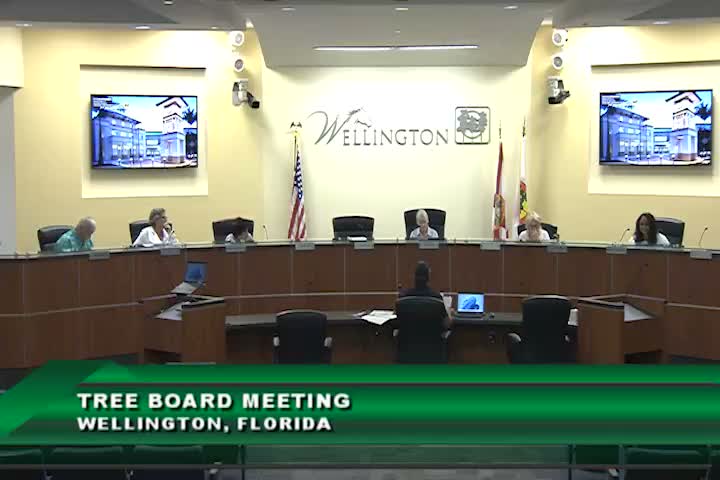
The Wellington Tree Board spent an extended portion of its June 4 meeting reviewing the village’s Flower Award program and agreed to revise the scoring rubric and outreach strategy.
Members repeatedly criticized the current points distribution, saying too much weight is given to native‑landscaping categories and not enough to curb appeal and visible design. “Curb appeal is not, did I clean up the garbage. So we need to change that for sure,” one member said while proposing that scoring emphasize what makes a passerby stop and look. Board members suggested moving points from native‑landscape categories into a broader curb‑appeal/design section and adding elements such as butterfly‑friendly plantings and maintenance/manicuring criteria.
The board also discussed outreach and nomination logistics. Suggestions included placing the application and award information in the village newsletter, posting physical application forms at community kiosks and the community center, working with the Chamber of Commerce and dominant local landscape firms, and using code‑enforcement officers and HOA contacts to identify strong candidates. Board members proposed expanding award categories to include a commercial/business winner and an institutional category (e.g., religious facilities), and to invite nominations from anywhere visible from public streets.
Members agreed to treat the Flower Award review as homework: each board member will propose specific scoring edits and outreach lists for the September meeting. The board also discussed modest incentives—plant vouchers from local nurseries or signage and online recognition—to increase participation, and identified the garden club and local master‑gardener networks as outreach partners.
No formal changes were adopted on June 4; members asked staff to provide the existing forms and scoring sheets so the board could prepare concrete edits for the next meeting.