Get Full Government Meeting Transcripts, Videos, & Alerts Forever!
Get email alerts on the Urban Forestry topic
No spam. Unsubscribe anytime.
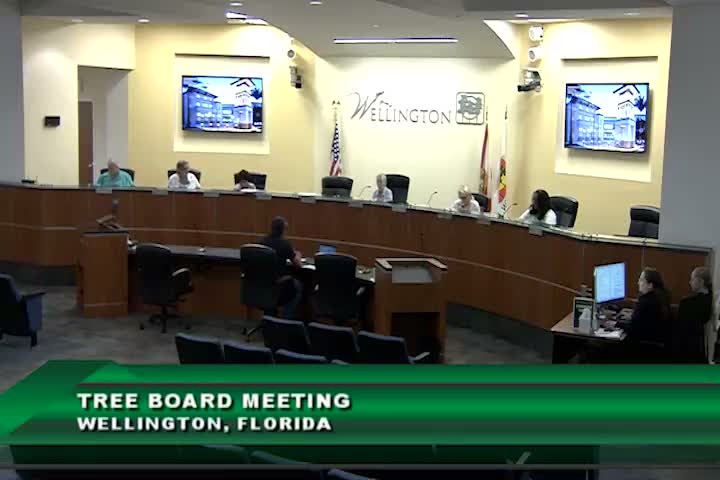
Tree board reports 896 plantings so far, seeks canopy focus for Moncada site
Summary
Staff reported 896 trees planted so far this year, described recent grant-funded plantings at Flying Cow and Moncada properties, and said a pending $50,000 Department of Agriculture grant would fund about 138 additional canopy trees once paperwork is complete.
Will, a Village staff member, told the Wellington Tree Board on June 4 that the village’s recent planting efforts brought the total number of trees planted this year to 896. “Total is now 896 for this year so far,” Will said.
The report said three Arbor Day Foundation grants funded recent plantings including sable palm, green buttonwood, satin leaf, pigeon plum, pond cypress and other species, and that the Flying Cow installation has canopy trees in place but requires underplanting and mulching. Will said the Moncada property plantings are mostly smaller seedlings and liners; township crews still need to finish pathways and grass work there.
Board members pressed Will on what the meeting considered “seedlings” versus larger stock; Will said some plantings were 15-gallon stock or 45-gallon for larger specimens and that some were only 1–3-gallon sizes. He added the village carries a one-year warranty on recent plantings and will replace material that does not survive within that period.
Will said the village will focus future plantings at Moncada on canopy trees and will prioritize grant applications for that site. He reported an additional pending grant from the U.S. Department of Agriculture for $50,000 to plant more canopy trees but said he had not yet received signed paperwork. “Once we get the signed documents, another $50,000 ... buys, was it 138 more?” Will said, adding he would proceed after paperwork was complete.
Board members discussed survival expectations and inventory practices. A member asked whether the village performs year‑after inventories to track survival; Will said staff can produce such an inventory and reminded the board the one‑year warranty is the current mechanism to restore counts that don’t survive. The board also discussed irrigation limits at some sites and the tradeoffs between planting many small stems versus fewer larger specimens when establishing canopy.
The planting report also noted upcoming volunteer and community planting opportunities, including 1,200 small pines reserved for a September garden‑club event and continued underplanting and mulching at Flying Cow.