Get Full Government Meeting Transcripts, Videos, & Alerts Forever!
Get email alerts on the Muslim Community Outreach topic
No spam. Unsubscribe anytime.
Islamic Society of Tulsa urges partnership on youth programs, cultural events and nonpolitical outreach
Summary
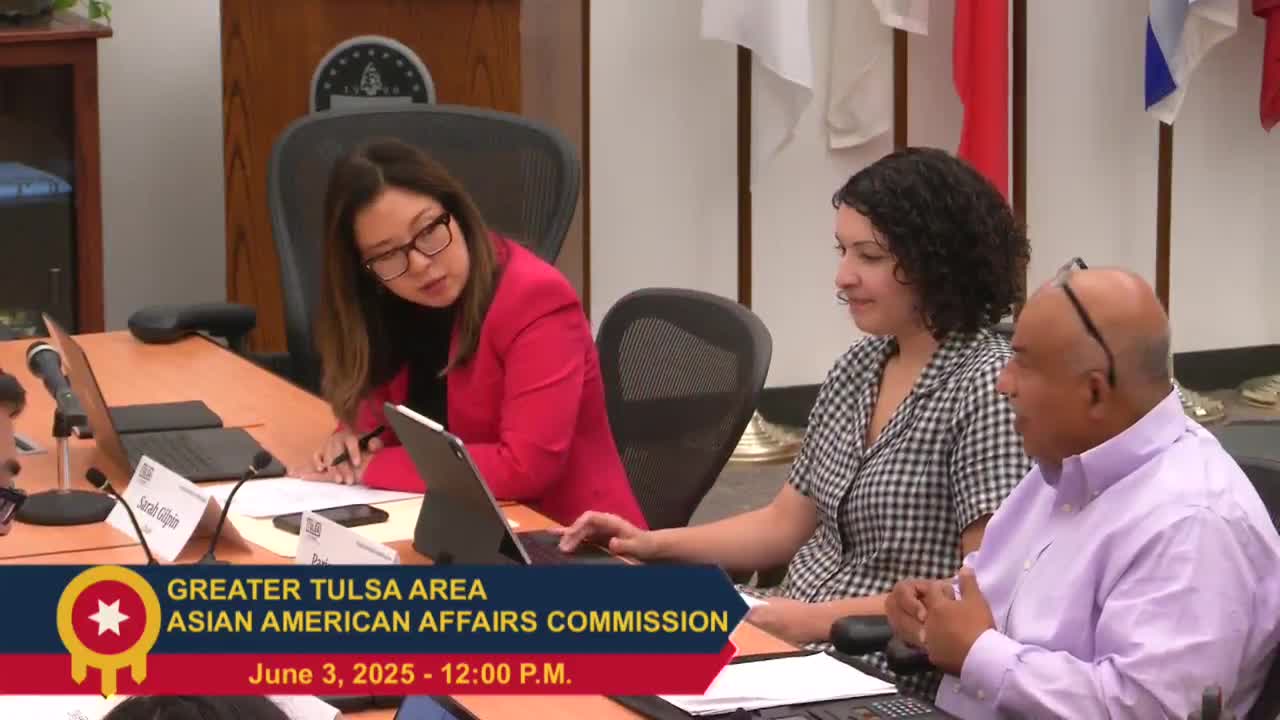
Shehab Ahmed, assistant imam and youth director at the Islamic Society of Tulsa, told the Tulsa Asian Affairs Commission that the mosque’s youth programs, Eid gatherings and trust-building work could be a low‑barrier route to connect Muslim families with city resources and the commission’s January cultural event.
Shehab Ahmed, assistant imam and youth director at the Islamic Society of Tulsa, told the Tulsa Asian Affairs Commission on June 1 that the mosque’s youth work and annual Eid prayers present opportunities for civic outreach and cultural education while cautioning the commission about perceived political risks for a religious congregation.
Ahmed said the mosque serves a broad and diverse Muslim community and described his role overseeing youth mentorship and character-building programs. "My name is Shehab Ahmed. I am the Assistant Imam and Youth Director at the Islamic Society of Tulsa," he said. He added, "I've heard varying numbers, but I hear that there's at least 10,000 Muslims in Tulsa," noting the mosque’s regular high attendance and limited parking.
Why it matters: Commission members who heard the presentation said Mosque-based events could help the city reach immigrant and refugee families who avoid government contact. Commissioners and staff discussed partnering on education — such as translated resource outreach and on-site presentations about 211 and other services — and inviting mosque leaders to the commission’s January cultural event.
Ahmed outlined two practical proposals: allow mosque members to present nonpolitical education programs (for example, how to use 211, translated resource services) and consider including Islamic representation at the Asian cultural event the commission is planning for January 2026. He emphasized that the mosque’s board must approve formal commitments. "I can send that message to them," Ahmed said when commissioners asked about participation in the January event.
Commission members raised barriers the mosque sees on the ground: language, cultural stigma around mental-health care and a reluctance among some immigrant families to engage directly with government agencies. Commissioners and staff suggested lower-barrier routes such as faith-based food drives and trusted person‑to‑person outreach rather than only city‑branded campaigns. One staffer described the United Way 211 system — a multilingual, anonymous resource hub — as a possible bridge to distribute translated information through the mosque.
On mental‑health outreach, Ahmed recommended culturally tailored programming and warned that some terms and approaches common in mainstream public health outreach can alienate families. He described prior examples where public agencies were welcomed into the mosque to give practical safety and service demonstrations — for example, firefighters or police presenting safety procedures — and suggested similar formats for health and resource organizations.
The commission approved its slate of 2025–26 committee chairs earlier in the meeting by unanimous voice vote; commissioners indicated they intend to follow up on potential collaborations and to invite mosque leadership to coordinate with the culture committee. The commission’s cultural event planning documents list a Saturday event on Jan. 31, 2026, as a planning target; Ahmed and commissioners discussed that timeline and the need for mosque board signoff before committing the Islamic Society of Tulsa as a partner.
The discussion included these concrete next steps: commission staff and committee chairs will (1) pass Ahmed’s interest and suggested formats back to the Islamic Society of Tulsa leadership for board approval, (2) explore nonpolitical education programs that could be delivered at the mosque (including translated 211 outreach), and (3) consider mosque participation in the January cultural event if the mosque board approves. No formal city funding or policy action was decided in the meeting.
The commission thanked Ahmed for attending and left the door open for further coordination pending mosque board decisions and logistics.