Lifetime Citizen Portal Access — AI Briefings, Alerts & Unlimited Follows
Somerville updates on yearlong guaranteed basic income pilot; officials report reduced stress, cash used for rent and essentials
Loading...
Summary
City staff reported preliminary findings from Somerville's guaranteed basic income pilot: 200 enrolled households received $750/month (July 2024–June 2025) and most spending went to rent, food and household goods; final evaluation by UMass Boston due March 2026.
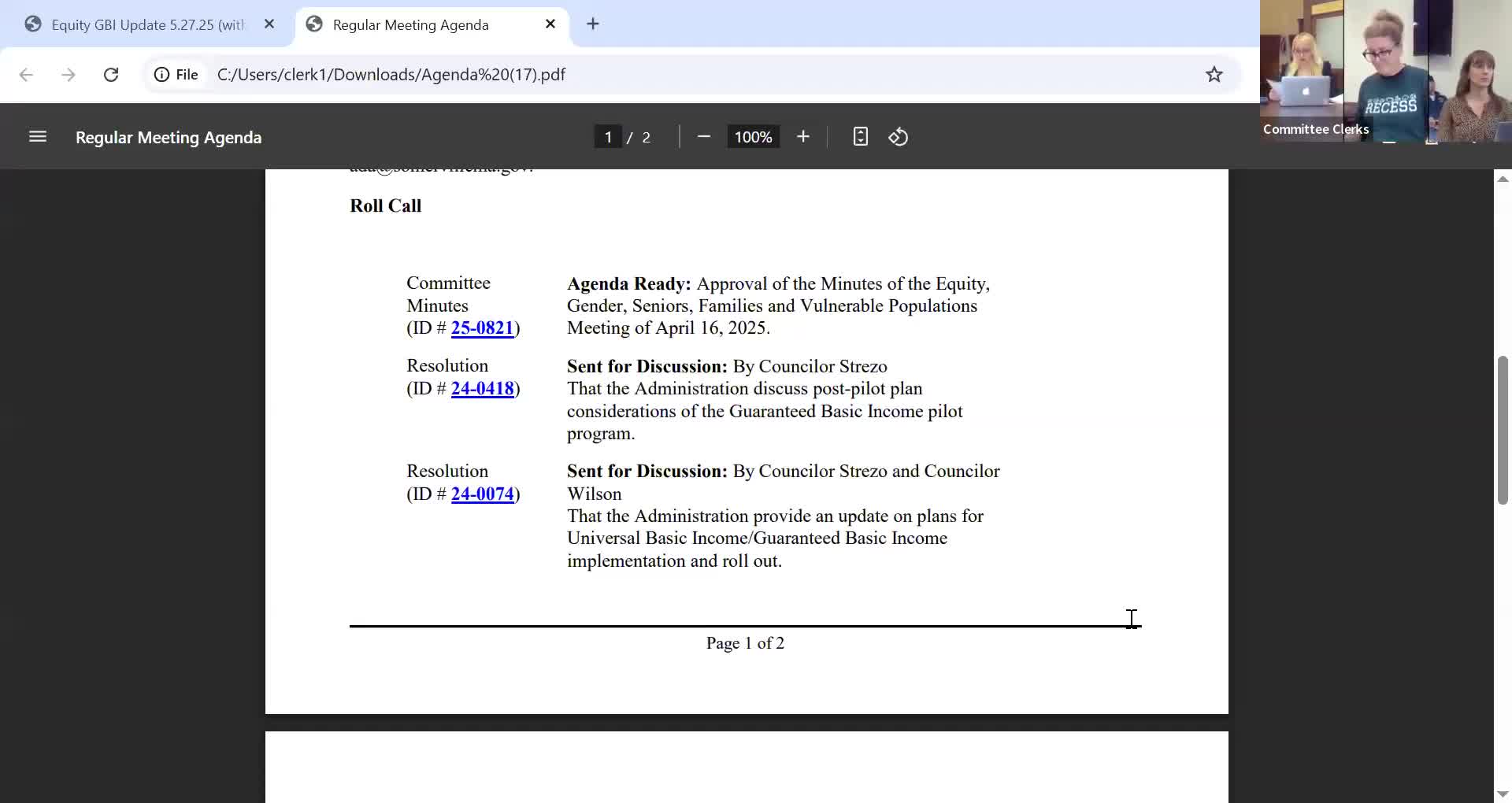
Somerville officials on May 27 updated the City Council committee on the city's guaranteed basic income (GBI) pilot, saying 200 enrolled households received $750 per month from July 2024 through June 2025 and that early data show participants largely spent the money on rent, food and household needs.
The update, presented by the city's ARPA team and its partners, outlined program design, participant characteristics and preliminary findings from midpoint interviews and vendor spending data. ARPA Director Erica Fernandez said, "We are distributing $750 per participant monthly. And that occurs from July 2024 to June 2025. In total, that will be over the course of 1 year, dollars 1,800,000.0 total distributed throughout these 200 participants." The presentation noted UMass Boston is leading evaluation work.
The committee heard that the pilot enrolled 200 existing clients of the Office of Housing Stability (OHS) or the Somerville Family Learning Collaborative (SFLC) who were experiencing homelessness, housing insecurity or housing crisis. Presenters described the majority of survey respondents as women, about half as parents, and many as renters; just under half of respondents identified as Hispanic/Latina. The baseline survey was conducted in June 2024; a post-program survey and a final evaluation are scheduled for June'July 2025, with a final UMass Boston report due in March 2026.
Presenters and partners said most participant spending traced on the vendor platform was cash withdrawals, followed by food, household and school supplies, and clothing. Staff and researchers told the committee that much of the cash is used for rent and to pay arrears because many landlords and some housing arrangements cannot be billed to a reloadable card. Jenny See, ARPA program manager, and partner organizations said card transactions allowed traceable insights while cash withdrawals required surveys and interviews to understand use.
Officials described qualitative benefits beyond purchases. Fernandez said midpoint interviews and partner reports showed "decreased stress and anxiety about finances," fewer hospital visits reported by some participants, and improved interpersonal connections. The presentation also highlighted that participants valued flexibility and dignity associated with unrestricted cash support.
Staff noted program supports provided by OHS and SFLC, including help locating no-fee ATMs, replacing lost cards and working with the card vendor on refunds. Presenters said the vendor platform blocks purchases at gambling and alcohol merchants.
Committee members asked whether the one-year pilot demonstrates reductions in long-term dependency or permanent exits from poverty. Fernandez and other staff cautioned one year is short to measure structural change, but said the pilot offers evidence that flexible cash can stabilize households. Officials said anecdotal positive outcomes exist but final survey data will give a fuller picture.
The presentation also flagged operational questions for any future program: long-term funding sources and legal constraints, eligibility design, enrollment and data-security burdens, administration and monitoring costs, evaluation and course correction, and wraparound services. Staff recommended documenting decisions made during the pilot to inform later programs.
What's next: OHS and SFLC are conducting transition work and workshops for participants to connect them to other resources. UMass Boston will administer the post-program survey in June 2025 and complete evaluation work in 2026.
Officials said the committee can expect a fuller report and formal evaluation results next year, at which point the City Council and future committees can consider policy and funding decisions.