Get Full Government Meeting Transcripts, Videos, & Alerts Forever!
Get email alerts on the Programs And Budget topic
No spam. Unsubscribe anytime.
Superintendent outlines MIRA manufacturing program, wellness updates and state revenue uncertainty ahead of district budget
Summary
Administrators described a new MIRA manufacturing elective for middle-schoolers, wellness committee actions, and warned that state revenue projections could complicate the district's 2025–26 budget process.
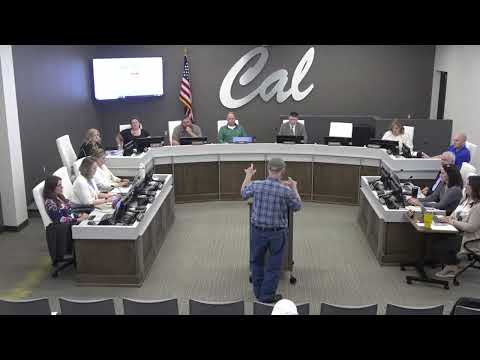
District administrators told the Caledonia Community Schools board on May 19 they will launch a MIRA program next fall to introduce middle-school students to manufacturing and trades and expand high-school manufacturing opportunities through Kent ISD partnerships and a recent grant. The administration also reported wellness-committee work tied to school meal and physical-activity requirements under the National School Breakfast and Lunch Program.
Dr. Diaz described MIRA as a county partnership that will provide lab space and equipment through Kent ISD and allow students to pursue certifications prior to high school graduation. The district will offer a single elective in the first year and plans to expand toward a full STEM offering in following years, administrators said.
Sarah Devries summarized the district wellness-committee’s triennial assessment and said the committee will post goals and materials on the district website. Initiatives mentioned for next year include parent-facing flyers with healthy snack ideas and a “mood-boost foods” promotion in younger grades designed to encourage students to try nutrient-rich options such as blueberries.
Superintendent-level staff provided an overview of the May consensus revenue estimating conference in Lansing and cautioned that state revenue projections are uncertain this year. The state’s School Aid Fund was projected in the conference to rise about 2.1% for the next fiscal year, an amount administrators said would translate into roughly $389 million statewide; local impact depends on final legislative decisions. Administrators noted that proposals on the table from state leaders have suggested higher per-student increases (governor ~4.1%, senate ~4.2%, house skeleton plan ~4.3%), which exceed the revenue growth estimate and will require negotiations over offsets.
The superintendent said the district must adopt a budget by June 30 but that final state numbers and student-count (fall enrollment) details can lag, increasing uncertainty. Staff warned the board to expect a district budget proposal in June that may be adjusted later in the summer after Lansing finalizes its budget.
Administrators also flagged broader state fiscal pressures, including reduced general-fund projections and a looming policy decision about road funding that could affect overall state budgets and, indirectly, school funding allocations.
Trustees asked questions about program timelines, how wellness resources will be shared with families and why the district must set a budget before Lansing finalizes numbers; administrators explained statutory fiscal deadlines and the offset between the state and school fiscal calendars.