
Delegate Corman’s bill would let counties use PILOTs to preserve naturally affordable housing
Get AI-powered insights, summaries, and transcripts
Sign Up Free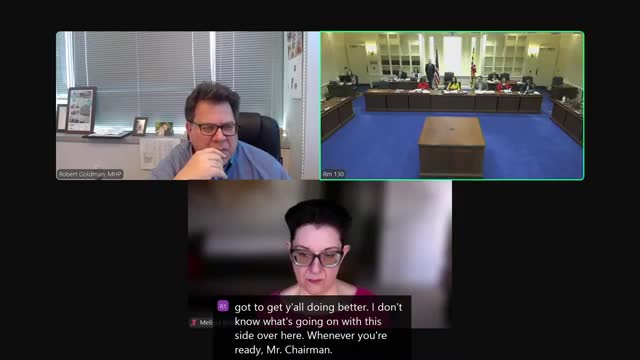
Summary
A bill to expand local governments’ authority to negotiate payment-in-lieu-of-taxes agreements for naturally occurring affordable housing drew support from county and nonprofit housing advocates, who said the change would preserve units that otherwise face redevelopment pressures.
Delegate Corman presented House Bill 390 to the Ways and Means Committee as the "Affordable Housing Payment‑in‑Lieu of Taxes Expansion Act." He said the bill would allow local governments to use existing PILOT (payment‑in‑lieu‑of‑taxes) pilot authority not only for new construction or substantial rehabilitation, but also to preserve naturally occurring affordable housing stock that the market might otherwise redevelop.
"What we have found in Montgomery County ... is we have naturally occurring affordable housing where the market has sort of made that housing affordable," Corman told the committee, arguing that the tool should apply to preservation as well as new construction.
Speakers from nonprofit and county groups testified in support. Robert Goldman, president of Montgomery Housing Partnership, urged the committee to approve the bill, saying current law limits pilot eligibility to properties requiring significant rehabilitation and that many affordable acquisitions today do not meet that threshold. Melissa Bonde, senior director at Enterprise Community Partners, said providers increasingly must acquire at‑risk properties that do not need immediate major repairs but still require financing to avoid loss to market pressures. Kevin Canale of the Maryland Association of Counties said the bill “closes a loophole” and gives counties another tool to preserve affordable units.
Corman noted the bill’s draft contains a 50 percent affordability rate provision; he said he intends to offer an amendment lowering that threshold to 30 percent while allowing counties to adopt higher levels locally. Councilman Friedson (Montgomery County) described the county’s automatic PILOT pilot and said the state change would let other jurisdictions adopt a similar approach.
Why it matters: supporters said the change would expand an already used financing tool so jurisdictions can preserve existing affordable apartments that face redevelopment or conversion to market‑rate housing. The bill, as presented, is permissive — it changes what counties may do, not what they must do.
What remains unclear: the bill does not specify fiscal impacts to counties or the state in detail in the hearing record, and Corman said the affordability threshold would be amended before committee consideration. No formal vote was recorded during the hearing.
Ending: Proponents asked for a favorable report so counties statewide could pilot expanded preservation efforts; committee members had no recorded questions at the close of the bill’s hearing.