Get Full Government Meeting Transcripts, Videos, & Alerts Forever!
Get email alerts on the Wildfire Management topic
No spam. Unsubscribe anytime.
House advances bill creating wildfire management task force, expands state forester duties and seeks restoration of wildfire suppression funds
Summary
Lawmakers passed committee‑of‑the‑whole recommendations for Senate File 152, which clarifies the state forester’s duties, creates a Wildfire Management Task Force and includes requests to reimburse 2024 wildfire suppression costs.
The House on Feb. 24 passed committee‑of‑the‑whole recommendations for Senate File 152, a multi‑part bill that (1) revises duties of the state forester, (2) creates a short‑term Wildfire Management Task Force to assess statewide preparedness and response, and (3) includes the governor’s budget request to reimburse state wildfire suppression accounts for costs incurred in 2024.
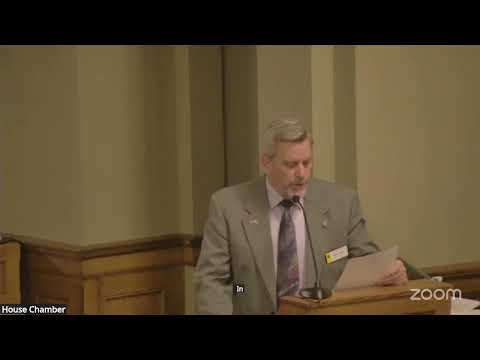
Representative Jared Bennett (chairing discussion for the bill) and Representative Angelus described the bill in detail. The standing committee amendment reduced the task force size (two members removed) and adjusted a proposed borrowing authority from $40 million down to $30 million to match the budget already passed by the Legislature. Representatives said the task force would review state and county capacity — including volunteer firefighter counts, inmate hand crews and interagency coordination — and report to the governor by Nov. 15, 2025. The fiscal note for the task force was $50,000; unused funds would revert.
Representative Angelus explained the bill’s three main elements: clarifying the state forester’s duties and cooperative authorities, creating a task force to study preparedness/response/training/logistics and to evaluate insurance and funding challenges facing landowners and communities, and carrying forward the governor’s request to reimburse suppression costs from 2024 (a request the House Appropriations committee had already addressed in budget action).
Representative Harrelson and others supported the measure, saying it would clarify the state’s role when multiple landowners and jurisdictions are involved in a fire and would help align funding responsibilities. The House adopted the standing committee amendment and passed the bill out of the committee of the whole; a recorded division showed the committee‑of‑the‑whole passage 33 to 18 earlier in the day for a related bill (Senate File 46) and committee action on SF152 was completed without a contested roll call in the excerpt.
Why it matters: speakers cited last year’s wildfire season and local town‑hall testimony highlighting communication and capacity gaps. The task force is time‑limited, required to report within the year and will inform potential statutory or budgetary changes to wildfire response and mitigation.