Get Full Government Meeting Transcripts, Videos, & Alerts Forever!
MDH highlights widening maternal‑health disparities; committee hears bills on home births, annual maternal death reviews and consent for exams
Summary
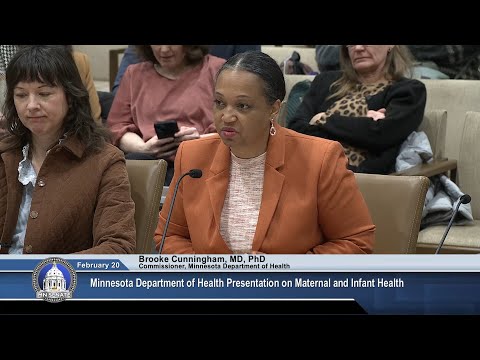
The Minnesota Department of Health told the Senate Health and Human Services Committee on Feb. 20 that Black and American Indian birthing people face substantially higher risk of pregnancy‑related death and described programs and funding gaps; the committee then heard several maternal‑health bills, including measures on home‑birth Medicaid reimbursement, annual maternal‑death reviews and explicit consent for educational sensitive exams.
ST. PAUL — The Minnesota Department of Health told the Senate Health and Human Services Committee on Feb. 20 that maternal‑health outcomes in the state mask stark racial and geographic disparities and described several state and federal programs aimed at addressing those gaps. Committee members then considered multiple bills that target maternal care access and oversight, including proposals to expand Medicaid coverage and reimbursement for home births, require annual maternal mortality reviews, and require explicit consent before educational sensitive exams on unconscious patients.
Commissioner Cunningham and departmental staff briefed the committee on data and programs. “While Minnesota has lower rates of pregnancy‑related death compared to the U.S. overall, maternal‑health disparities in Minnesota tell a different story,” Commissioner Cunningham said. She told senators that from 2017–2019 Black pregnant people in Minnesota were 2.3 times more likely to die of pregnancy‑or childbirth‑related causes than white pregnant people, and that American Indian maternal mortality was roughly four times higher. The department noted that 40% of maternal deaths occur in Greater Minnesota and that 36 of 87 counties do not have a birthing hospital.
The department detailed social determinants linked to poor outcomes: housing instability, food insecurity, lack of reliable transportation, incarceration histories, and limited access to prenatal and postpartum care. MDH staff said maternal mental health and substance use remain leading contributors to severe maternal morbidity and…
Already have an account? Log in
Subscribe to keep reading
Unlock the rest of this article — and every article on Citizen Portal.
- Unlimited articles
- AI-powered breakdowns of topics, speakers, decisions, and budgets
- Instant alerts when your location has a new meeting
- Follow topics and more locations
- 1,000 AI Insights / month, plus AI Chat