Get Full Government Meeting Transcripts, Videos, & Alerts Forever!
Get email alerts on the Financial Privacy topic
No spam. Unsubscribe anytime.
Senators advance bill to limit merchant coding and financial surveillance of gun and ammunition purchases
Summary
The Committee of the Whole reported House Bill 234 favorably; the bill bars payment processors from using merchant category codes to identify firearms or ammunition sales and prohibits financial institutions from discriminating against lawful firearms entities, while creating enforcement steps involving the attorney general and private civil actions.
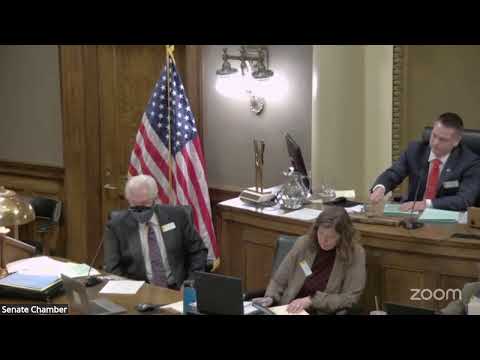
House Bill 234, titled in the floor reading as the "Second Amendment Financial Privacy Act amendments," was reported favorably by the Committee of the Whole after debate on enforcement mechanisms and the role of the attorney general.
Senator Hyde (introducing on the floor in place of the sponsor) said the bill would prevent payment processors from assigning or using merchant category codes that identify sales of firearms or ammunition, and would make it unlawful for financial institutions to decline lawful payment card transactions for firearms or ammunition or otherwise discriminate against firearms entities. Supporters framed the bill as protecting the financial privacy of lawful firearm purchasers and merchants and as a follow-up to earlier state legislation addressing banking and de‑banking concerns.
Floor questions focused on implementation and enforcement. Senators asked how the attorney general's office would investigate alleged violations and which office or staff within the AG would conduct investigations. Senator Nethercott and Senator Crago asked about who could bring civil actions (the bill provides a private right of action for aggrieved parties if the attorney general declines to act) and how enforcement would interact with out‑of‑state processors and merchant‑service providers. Senator McKeown explained that point‑of‑sale systems can code items as general merchandise so a retailer's coding choice affects what processors see on statements.
Senators also asked whether the new language would create unintended vagueness in enforcement or overlap with the FIND Act passed earlier; some senators said they wanted staff to clean up drafting and clarify procedural steps so the statute would be enforceable without generating ambiguous litigation.
The Committee of the Whole reported the bill favorably. Floor discussion noted the need to clarify language around AG investigatory authority and civil enforcement processes before final enactment.
Ending: House Bill 234 was reported favorably by the Committee of the Whole and will proceed in the Senate. Sponsors and floor leaders signaled an intent to clean up procedural and enforcement language in subsequent drafting or on second reading.