Get Full Government Meeting Transcripts, Videos, & Alerts Forever!
Get email alerts on the Finance Cbdc topic
No spam. Unsubscribe anytime.
Senate committee approves bill urging federal ban and barring state agencies from using central bank digital currency
Summary
The Committee of the Whole reported House Bill 264 (Central Bank Digital Currencies Prohibitions) favorably after adopting a standing committee amendment that removed legislative findings; the bill prohibits state agencies from accepting payment in a CBDC, directs the state to urge Congress to ban federal CBDC, and clarifies enforcement language.
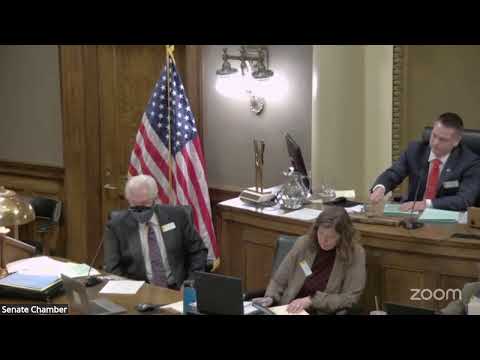
House Bill 264, described on the Senate floor as a prohibition on state agencies accepting or requiring payment in central bank digital currencies (CBDC), was reported favorably by the Committee of the Whole after the adoption of a standing committee amendment that removed certain legislative findings.
Senator Hyde explained House Bill 264 as a bill that would prohibit state agencies from accepting a CBDC as payment or using public funds in relation to a CBDC. The bill also contains a formal legislative request urging Congress to enact federal legislation banning a central bank digital currency. During floor remarks Senator Hyde cited perceived risks including surveillance of financial activity and loss of privacy, and referenced an executive order that the senator said had addressed CBDC at the federal level (the senator attributed the executive‑order reference to President Trump; that attribution appears in floor remarks and is reported here as the senator's statement).
Senator Anderson presented a standing committee amendment that struck the bill's findings (previous pages with explanatory findings were removed because committee members wanted the statutory text to be concise for the green book). Senators discussed the amendment and adopted it. Senator Wright and others spoke in support of concurrence with committee recommendations.
The Committee of the Whole passed House Bill 264 after the standing committee amendment was adopted. Floor discussion noted that the amendment removes pages of findings and that the bill - as amended - focuses on the prohibition language and the formal legislative urging of Congress. Supporters presented the bill as protective of privacy and of Wyoming's control over state payments; opponents did not dominate floor remarks in the transcript.
Ending: House Bill 264 was reported favorably by the Committee of the Whole and forwarded for further Senate consideration. The floor record shows the standing committee amendment was adopted and the bill was reported out of committee.