Get Full Government Meeting Transcripts, Videos, & Alerts Forever!
Get email alerts on the Student Assessment topic
No spam. Unsubscribe anytime.
Board hears winter NWEA and state test comparisons showing steady gains
Summary
The board received a routine update on district benchmark testing (NWEA) and spring summative tests (M-STEP and SAT), with administrators reporting modest gains and a goal of 80% of students reaching national-average performance levels.
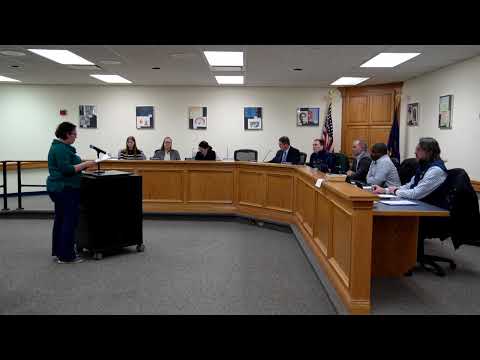
DeWitt Public Schools administrators presented winter benchmark and recent summative assessment comparisons showing steady improvement and continued focus on student achievement.
Brian Decker, who identified himself as presenting district benchmark data, said the district tracks NWEA measures and seeks to have 80% of students at or above the national average across K-8. Decker reported small gains in reading and larger gains in math over recent years, and he highlighted a rise in the proportion of students at the highest achievement band for math (from roughly 27% to about 31% in K-8 aggregate, per his slides).
Decker said changes in NWEA's testing algorithm over the past two years may have affected score comparisons and that new 2025 national norms will reset comparisons next year. He pointed to locally available supports — curriculum teams, instructional coaches, targeted programs such as IXL and math-acceleration efforts — as contributors to growth among both high-achieving students and those needing intervention.
Decker also reviewed spring 2024 M-STEP and SAT results versus peer districts the state assigns for comparison. He said DeWitt was on average about 10 points higher than that assigned cohort in English/language arts and about eight points higher in math. Against local Greater Lansing peers, he said DeWitt ranked near the top (second place in ELA and math in his local peer set).
Board member questions focused on causes of improvement and how to sustain gains. Decker credited several long-standing practices, including regular data reviews, an established cycle of data inquiry that continued through the COVID period, and targeted supports for students identified as high-achieving but with lower growth. "We didn't drop the ball during COVID," Decker said, and he attributed continuing gains to that sustained focus.
Why it matters: The presentation frames district curriculum and intervention priorities for the year and informs staffing and program decisions tied to the budget process and federal/state categorical funding.
Decker said detailed quintile and building-level reports will be posted to the district's transparency page for board members and the public and that he will provide additional building- and grade-level breakdowns online.
Looking ahead: Decker said the district will monitor the new 2025 national norms and continue to use benchmark results to target interventions and enrichment.