Get Full Government Meeting Transcripts, Videos, & Alerts Forever!
Get email alerts on the Local Option Sales Tax topic
No spam. Unsubscribe anytime.
County council approves first reading of 0.2% local option sales tax for transit, highways and public safety
Summary
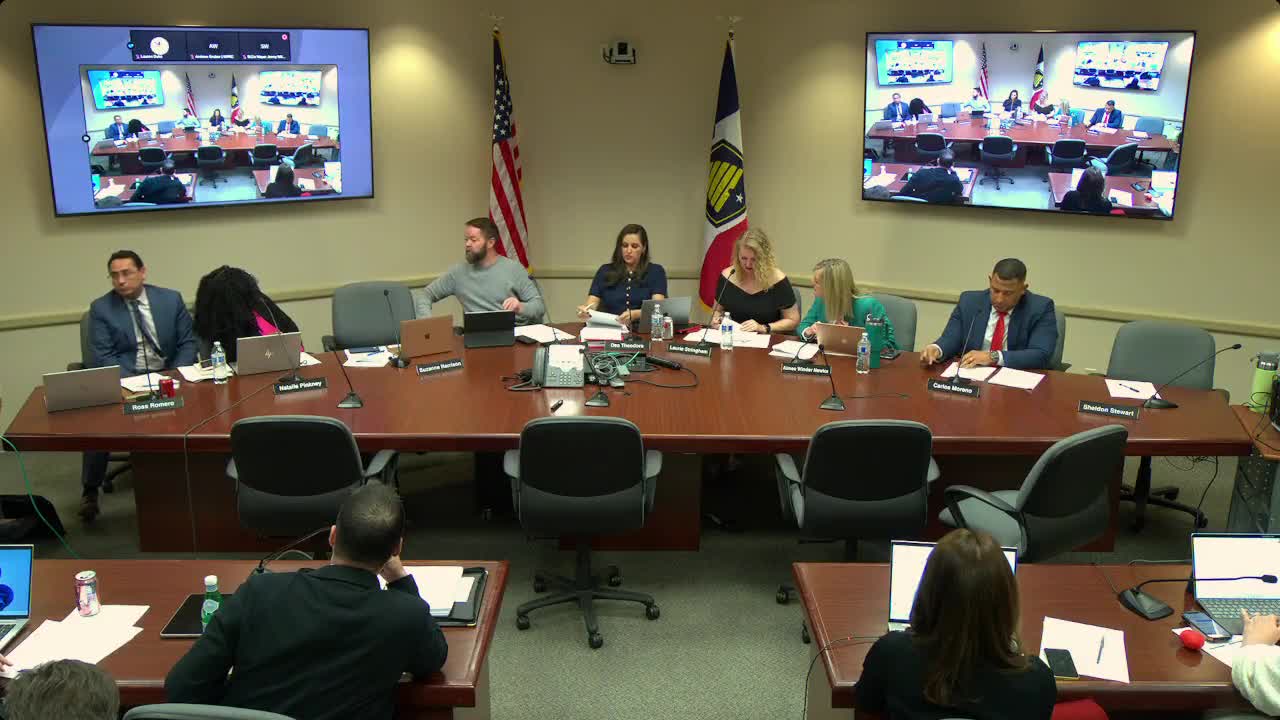
On Feb. 11 the Salt Lake County Council voted 7–2 to approve first reading of an ordinance to impose a 0.2% countywide local-option sales and use tax that would fund transportation projects, a county transit bank and county public safety uses; the measure advances to final consideration next week.
The Salt Lake County Council approved first reading of an ordinance to impose a 0.2% local option sales and use tax countywide, with a 7–2 vote on Feb. 11. The tax, as drafted, would generate roughly $76 million annually in the first years and be distributed among state, cities and county transportation priorities and a county allocation that may be used for public safety or transportation needs.
The ordinance calls for 0.05 percentage points to be returned to cities (distributed by population and point of sale); 0.09 to a county “first-class infrastructure bank” (managed by the county and available for loans and a specified BRT project in the first three years); and 0.01 to construct a 5600 West express bus project. The county share (about 0.05 after the first three years) can be used for county transportation or public safety priorities.
“The money would provide a county transit funding stream and the flexibility to address public safety shortfalls over time,” sponsor Council Member Amy Winder Newton said during the discussion. Andrew Gruber, executive director of the Wasatch Front Regional Council, described the distribution mechanics and emphasized that the proposal is multi‑modal, saying it supports roads, trails and transit projects across the county.
Mayors from West Jordan and Mill Creek—Dirk Burton and Jeff Silvestrini—outlined local priorities should the tax be enacted. “5600 West has that bus on 5600 West, the express bus,” Burton said, describing it as a necessary step to unlock subsequent Mountain View Corridor interchange work and to relieve East‑West traffic in the southwest part of the county.
Council members debated the proposal’s fiscal and political consequences. Opponents said the county should look for further internal cuts before asking residents for new revenue; proponents said the county’s budget does not contain an obvious ongoing funding source large enough to cover public safety and jail capacity needs now being discussed. Council members also noted that the measure would create recurring county revenue that could close a multi‑million dollar gap for operations tied to expanding jail capacity and competency restoration.
After public debate and a roll‑call vote the council approved first reading, 7–2. Council members Harrison, Bradshaw, Pinkney, Winder Newton, Romero, Stringham and Theodore voted aye; Council Members Stewart and Moreno voted no. The ordinance will return for final adoption at the council’s next meeting.
If adopted countywide, the tax would take effect according to state law processes; the ordinance as read sets distribution rules and initial uses but requires final council action and state administrative steps. The council also discussed that individual cities would receive a formula share and that the county’s first‑class infrastructure bank would be subject to county oversight.
Council members said they would continue to seek budget efficiencies before final action and that staff would return with any technical amendments they recommend before the final vote next week.