Get Full Government Meeting Transcripts, Videos, & Alerts Forever!
Get email alerts on the Police Report topic
No spam. Unsubscribe anytime.
Police chief reports higher call volume, retail theft and progress on LPR rollout and new facility
Summary
The police chief presented the department’s quarterly and year-to-date totals: a rise in calls for service, continued retail-theft problems, clearance-rate statistics, accreditation recognition and next steps for license-plate-reader deployment and a new facility.
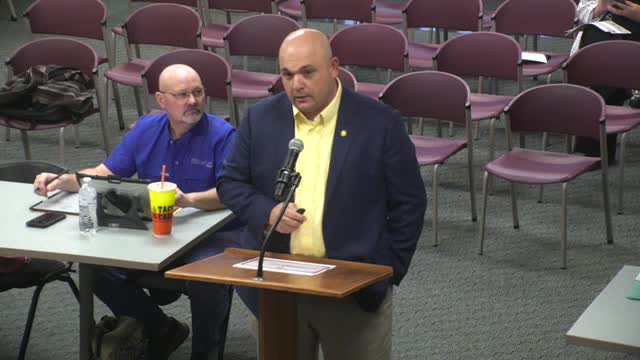
The City of Decatur police chief presented the department’s quarterly and annual totals, saying officers handled thousands of calls for service and highlighted operational and community programs as the department continues to adapt to rising demand.
The chief told council the department’s call-taking center logged the equivalent of more than 42,000 calls and referenced a system-export figure of 49,000 dispatch-call records; he explained the new CAD/RMS generates event counts differently and that per-event counts may understate unit activity when multiple units respond. The department reported 691 arrests for the year.
The chief flagged retail theft as an ongoing issue, reporting roughly 267 theft calls and 207 theft offenses that resulted in 161 arrests. Traffic incidents included 564 dispatched incidents and 327 accidents that officers worked; the chief said some crashes are settled between drivers before an officer arrives. Enforcement totals included about 6,546 citations and more than 2,400 warnings for the year.
Criminal-investigations clearance rates were presented: approximately 41.4% for theft, 44.3% for assault and 20% for fraud offenses. The chief noted fraud investigations can be resource‑intensive, especially for online and cross‑jurisdictional cases, and reported an overall clearance rate near 52.1% for cases handled by CID.
On technology and operations, the chief said the department paused a trailer-mounted license-plate‑reader (LPR) while securing a memorandum of understanding with the Texas Department of Transportation (TxDOT) and the required TCIC permission for data integration. He reported that state-side TCIC approval was granted last Friday and that he expected formal TxDOT approval in writing soon; following that, the city will resume implementing LPR cameras on major highways and city streets and return the trailer to service.
The chief also described community programs and department highlights: Santa Cops (assistance to families at Christmas), a drug take-back event that collected 190 pounds of medication, summer programs for youth and a Back the Blue fundraiser that netted roughly $7,500 for scholarships. He said the department received re‑recognition through the Texas Police Chiefs Accreditation Program for the fifth time and noted the agency was among the earliest adopters in the state’s program.
Finally, the chief gave an update on the PD’s new facility: a generator has been installed and electrical work was expected to be completed by the week’s end, with interior tiling starting soon. He invited council members to tour the facility.
Why it matters: the figures reflect growing service demand and show how operational changes in dispatching software can affect performance metrics. The LPR rollout and facility improvements are near-term operational steps that may affect staffing, patrol patterns and equipment costs.
Council asked clarifying questions about data-counting methods for dispatched calls, the scope of dispatching (police only versus combined public-safety dispatch for fire/EMS) and the status of the LPR program.